Artistic philosophy in the works of filmmaker Roger Deakins
 By Admin
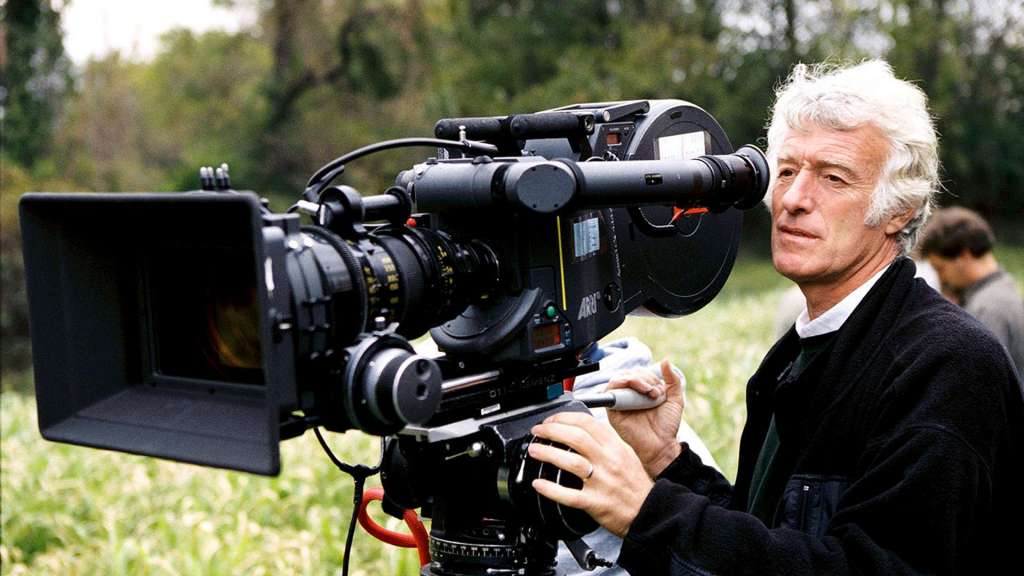
In this article, we talk with you in detail about the artistic philosophy in the works of filmmaker Roger Deakins, and his philosophical view towards cinematography and the style of visual storytelling. Introduction and clarification First, I would like to point out that this article is an attempt to analyze and conclude the philosophy of some of the works of filmmaker Roger Deakins, and to collect some information from them. This article is a personal effort, so keep that in mind when reading, and share your opinions with us in the comments below if you would like to add or discuss one of the points.
Who is Roger Deakins?
In the world of filmmaking, filmmakers work as a single team, each in their specialty and sector, to reach the final artistic material in the desired manner. The director of photography is primarily responsible for the camera sector, and is responsible for determining the nature of the shots, camera movements, lighting mechanism, what will appear in the shot from others, what the background will look like, and what the nature of the colors in the image. If we want to talk about a person who mastered all of the above, presented legendary cinematic works, and was subsequently nominated 15 consecutive times for the Academy Award for Best Cinematography, then we are talking here about the filmmaker Roger Deakins. But what does filmmaker Roger Deakins do to achieve everything he has achieved so far?
How does he use contemporary technology in the world of filmmaking to achieve such a well-crafted visual novel? Roger says, and I quote: “The issue, from my point of view, is not about creating a beautiful image or achieving a unique composition. For me, the goal is to embody the work in the correct way in the first place.” According to this quote, the rules of analysis change from one work to another according to the text and the story told in the film, so the analysis mechanism will differ. When talking about properly analyzing a cinematic material, we must focus on the three basic points in cinematography: Staging - the method of presentation (if the translation is correct) Camera Movements - the movement of the camera Lighting - starting from three - Roger Deakins and his artistic philosophy Staging - the method of presentation The word staging symbolizes the things that appear in the scene in general form, their locations, and the mechanism of their movement, And its angles, and the nature of the shot in general. The angle of the shot, whether high or low, shows a difference in the character’s strength and condition while telling the story. Likewise, when talking about the difference between wide-angle shots and telephoto shots (using lenses with a large focal length), for example, there is a big difference, and each shot can suggest and tell the story in a completely different way.
See the article: Measurements of cinematic shots for a more detailed analysis of the method of staging the scene. We share with you a distinctive scene from the works of filmmaker Roger Deakins from the movie Sicario. In the scene below that we will analyze, the story talks about a group of American special forces trying to cross the border from Mexico towards the United States of America. While crossing the traffic jam, groups of Mexican gangs are spotted around them, and the scene shows us how the group deals with the danger surrounding them: At the beginning of the tense scene, we notice that the first shots build for us a state of tension. The first moment that Matt raises the weapon, the state of the scene changes to one of tension. Perhaps we see this in the impression of the actress trying to avoid the tip of the weapon in the narrow place, but nevertheless, to suggest the tension occurring and the changing situation that the characters are experiencing, the 180-degree rule was broken. In order to know where the source of the threat is that caused us and the scene all this tension, we move to a shot of the source of the threat. We notice that the shot was not filmed from a place close to the element to be shown, nor was it filmed with a wide/wide lens, but rather it was filmed using a telephoto-zoom lens, to form what is known as a dirty frame, which means that the elements appear in the foreground of the scene in a blurry way at the edges of the shot. The presence of these elements helps us to know that what we are seeing now in this shot is exactly what the character who is carrying is looking at. Weapon, to form the shot we have a shot known as POV. Quickly, after a distinct and exciting state of building enthusiasm and tension, the American force moves into the scene, to deal with the target, and here the director of lighting and photography decided that this movement would be covered from above by a helicopter, in what is called the Bird’s-Eye View, where the camera moves starting from showing the traffic congestion, then heading diagonally Dutch Angle/Tilt. Covering the event from above contributed to building the state of tension, as it allowed us to see the large number of recruits heading towards the target, and the speed of their deployment, not to mention the speed of their deployment. The oblique camera angle suggests the unstable and anxious state of the scene.
Later, we move from the primary event to a secondary event, which is the point of view of the agent who remained in the car. Here we notice more camera movement in the scene. The camera moves to represent the movement of the actress’s eyes, ending on the side mirror to notice an armed person about to shoot at her. In these shots, the camera and its movement become what represents the actress’s state and what she sees. We now live the actress’s psychological state, beginning with seeing the security deployment around the cars on the road and ending with the discovery of the gunman behind the car. In this way, more of the story was shown and told, through Simulating the actress' point of view via camera movement. We notice in this scene that every decision made by the director of photography was based on what the story required, and not what the artistic aesthetic required, so telling the story visually in the correct manner is much more important than creating aesthetics that have no justification in the story. Many of us seek to create beautiful images and shots, without thinking about the reason for our creation of them, and here lies the philosophy and concept of the need for photography to adapt to the story, and not the other way around, as cinematography must adapt and contribute to telling the story, and not create exhibition material for the capabilities of the director of photography and the production team, as the story is the justification for everything first and foremost.
Cinematographer Roger Deakins says: Cinematography should not stand out on its own in a film, and if it does, then you have failed in your work as a cinematographer. The judgment on “good cinematography” should be based more on the extent to which the cinematographer used his tools, personnel, compositions, and lighting to present the story and make it wonderful. Perhaps this saying represents one of the most important artistic philosophies of the filmmaker Roger Deakins. When we analyze any of his works, we do not see affectation or complexity in an attempt to create a beautiful image, but rather we witness a telling of the story in a way that makes us immerse ourselves and live in the details of the story without being distracted from it by the beauty of lighting, camera movements, etc. Camera Movements - Camera Movements Camera Movements - Camera Movements can suggest a lot while telling the story. They also add a lot of dimension to the scene and increase the viewer’s interest and focus on the event. However, camera movement is not done simply for the need to move the camera alone! Rather, it must be done carefully and for a known purpose, such as tracking the actor’s movement, for example, or to reveal more information in the scene.
The logical camera movement, the positioning and movement of the actors, and the nature of the presentation style - staging are tools that help tell the story visually naturally, which adds a layer of cinematic structure to reach a cohesive scene. Recently, with the spread of the use of camera gimbals, we have seen extensive use of motion stabilizers, and their use has become more of a trend, as many have forgotten an important point, which is that if it is possible to use a motion stabilizer and it is available at hand, this does not necessarily mean the need to use it. The need for camera movement does not come just because of our ability to move the camera, but rather it comes first and last according to what the story dictates to us, not the other way around. We dictate to the story a certain lighting style or camera movement, and the story is what dictates to us the correct working mechanism. Lighting - Lighting Lighting is not only a substance to help us see things within the scene, as this is its natural and expected function from the word light, but the use of lighting in a way that allows us to determine a specific style for the film, or for the visual material, is the most important goal and work of the cinematographer, and it is what must be focused on while talking about lighting.
We spoke very extensively in many articles under the category: Cinematography about many methods, mechanisms and forms of lighting. Roger Deakins says, and I quote in his talk about lighting and its patterns: “Anyone who deals with movie cameras can do cinematography. The subject is easy if we want to understand it in this way, but the subject requires a lot of planning and preparation, and a lot of concentration as well.” He adds: “Of course, lighting methods and modern technology can be used in different artistic forms, such as camera movement, for example, or different shapes and colors of lighting. Of course we can, but how will that serve the telling of the story in the film? Will it be appropriate for the film? Or will it be more than what is required? The filmmaker and the director must work together to answer these questions.” Excerpted from the Team Deakins podcast. You can listen to the entire episode here: One of the most important things that distinguishes filmmaker Roger Deakins is that he does not have an actual model for lighting, camera movement, and staging. Rather, he relies primarily on meeting the director’s desire and artistic vision as required by the project through fairly simple rules of photography. What makes his work truly distinctive is that in every work he does, he still makes us feel and surprise us as if it is the first time we have seen a work of his with such ingenuity. We notice in all of the works of filmmaker Roger Deakins that the lighting in the scene is always justified, whether in terms of direction, intensity, color, or even the degree of softness. We do not find lighting that illuminates the actor’s face solely because of the need to illuminate the actor’s face, but rather there is a reason for its presence from this angle and in this color, and for this reason we feel that the lighting in the scene is natural lighting coming from a window or from a desk lamp.
The most important feature of the works of cinematographer Roger Deakins: Roger Deakins's cinematography style is closely followed and adapted to the story. He uses the camera and lighting in a very simple way, without affecting the effectiveness and style of telling the story. In his works, he creates a state of realism in lighting.
The lighting used in his works is always justified in terms of direction, source, color, and intensity. I hope that this article is sufficiently comprehensive. I would like to remind you that if you find any questions, you can send your inquiries by clicking on Contact Us, and you can also follow us through our account at
Instagram for more exclusive content. May you always be creative.
Did you like the article? Share it with your friends..
DROPIDEA
We hope this article has added real value to you. At DROPIDEA, we always strive to deliver high-quality content that helps you grow and evolve in the digital space. Follow us for more useful articles and guides.
Admin
DROPIDEA
Latest Articles

Microsoft Gains $3.2 Billion from Its Investment in Anthropic
Zuckerberg: Billions of People Will Have AI Assistants Within Five Years
Microsoft Enters Direct Competition Against OpenAI and Anthropic
Pangram Raises $9 Million to Detect AI-Generated Content