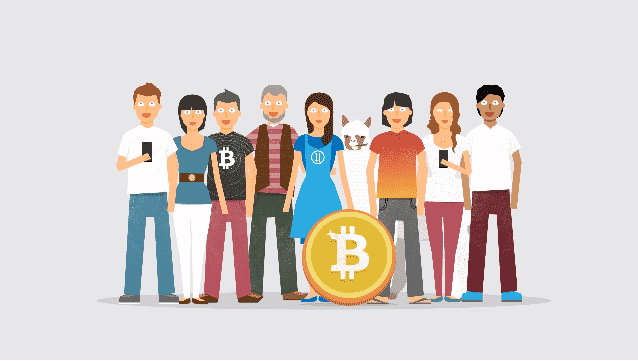
East vs. West – How does cryptocurrency adoption compare?
 By Admin

@ET-DC@eyJkeW5hbWljIjp0cnVlLCJjb250ZW50IjoicG9zdF90aXRsZSIsInNldHRpbmdzIjp7ImJlZm9yZSI6IiIsImFmdGVyIjoiIn19@ For East and West, the paths to blockchain and cryptocurrency adoption are not the same and both face their challenges Private. Ethereum (a digital currency) recently turned five years old, and coincidentally, it also appears to have reached an important turning point in user confidence. In the second quarter of 2020, Ethereum's daily active users nearly doubled to 1.26 million.
Up from 637,000 in the first quarter, according to a recent report from Dapp.com. This spike is widely attributed to the issuance of Compound’s COMP governance token. In the same report, several other numbers stand out.
It is worth noting that the most visited and most active daily blockchains are Klaytn and Terra after Ethereum. Klaytn was far ahead of Ethereum in daily active users before the hype around DeFi following the release of the COMP token in June. Furthermore, Klaytn has made great strides in achieving over 7.5 million unique users (such as large investors and advertisers) in total, versus 4.5 million on Ethereum.
Although Terra is still catching up with 1.78 million total users, it is worth noting that it has outpaced every other major blockchain platform. Including EOS, Tron, and NEO. What is it about Klaytn and Terra that has managed to attract such huge user bases when both have been around for less than half the lifespan of Ethereum?
There can be many factors driving the game. However, perhaps the most obvious comparison is between East and West. The Ethereum Foundation is based in Switzerland, and many Ethereum-based decentralized applications are developed by teams in the Western country.
While Klaytn and Terra are more focused on Asia. Looking at the smallest and smallest things, there are some crucial differences in the path of digital currency adoption between countries in the East and those in the West. I believe these differences create a reasonable basis for variation in adoption rates.
Starting from the bottom up as Silicon Valley established itself as the center of Western technological development. Entire Asian countries such as South Korea, Japan, and Singapore have become known for bringing technology into consumers' daily lives. In the case of South Korea, the government has been on a mission to put the nation at the forefront of communications development for more than four decades.
From 1980 to 1987, government investments took Korea to global status in communications. Fast forward to today, where South Korea has had global access to the fiber network for years now. Compare this to the United States, where access to fiber is about 30%.
Furthermore, current investment means that Korean infrastructure could be developed to much higher speeds at low costs for decades to come, according to the Electronic Frontier Foundation. Consumer-Focused Digital Currency Adoption Heavy government investment in infrastructure eventually led to the rise of major global technology companies. Including Samsung and LG, establishing themselves in Seoul.
Furthermore, these companies have also been at the forefront of adopting blockchain technology and integrating it into their existing range of consumer products. For example, Samsung has integrated blockchain technology into its Galaxy S10 and S20 phones, and has also teamed up with Gemini Wallet to connect the exchange directly to Samsung's blockchain wallet. One big reason for the rapid success of Klaytn and Terra is that they were founded by companies that already had an established product and consumer base.
Klaytn grew out of a subsidiary of Kakao, which operates the largest messaging app in Korea. It holds 98% market share, KakaoTalk. Terra, Samsung Likewise, Terra hosts CHAI, a mobile payment service integrated with several major payment service partners.
Including Yanolja, the number one hospitality app in Korea, and Nexon, the number one game publisher in Korea. Terra is on track to surpass 1 trillion tera (KRT, equivalent to over $830 million) in fork growth over the next six months. In a similar way to Samsung, these projects have taken an existing product or platform and integrated blockchain technology in such a way that users don't even need to know that the underlying technology is based on blockchain.
Furthermore, they have an established user base and understand their needs, enabling them to create solutions that consumers value. This may explain why Ethereum takes longer to attract users. One critical barrier to entry is the user's need for ownership
Ether (ETH) to pay transfer fees, a barrier that developers either leave as is or work to overcome. The rise of decentralized finance (DeFi) represented the first paradigm shift in the crypto industry as developers began to build around market demand, seizing the opportunity to provide new financial infrastructure to users. Although DeFi is undoubtedly a fascinating and thriving sector powered by the Ethereum ecosystem, it operates in a niche of users who already know and understand blockchain technology and cryptocurrencies.
The barriers to entry are a natural consequence of the way Ethereum emerged – as a solution for infrastructure development, not as a response to consumer demand. Differences in Regulatory Approach When Western companies tried to take a more consumer-focused approach to implementing blockchain, it was unfortunately the case that US regulators stopped them in their tracks. The most notable examples are the Telegram Open Network project and Facebook's Libra project.
Telegram was forced to abandon the TON project after the SEC deemed its sale an offering of warrants and securities, a decision that was later criticized by SEC Commissioner Hester Peirce. Pierce also pointed out that Telegram is not even an American company. Likewise, Facebook's Libra project has faced intense regulatory scrutiny from both the US and EU countries.
This eventually led to many of the original members of the Libra Association withdrawing from the project altogether, such as PayPal. The project now faces long delays.
This leads to another crucial difference between East and West – the approach to regulation. This problem also has roots that go back further than it may have first appeared. To compare the US and South Korea, the authorities of both countries started sitting up and paying attention to cryptocurrencies around the time of the ICO boom in 2017.
Facilities and difficulties facing digital currency in the East and West. However, thanks to the well-established digital infrastructure in South Korea, many citizens have already invested heavily in cryptocurrencies. At one point in 2017, Bitcoin (BTC) and Ether were trading on South Korean exchanges at a 30% premium over their Western counterparts due to high demand for the digital currencies. Therefore, in contrast to the SEC's strict positive stance, the South Korean government had to take a more cautious approach.
Tightening the screws with a similar stance to the US, regulators would have been a political death knell. Moreover, obtaining investment can be fraught with friction in the United States due to onerous obligations imposed by the Securities and Exchange Commission on investment funds. In contrast, the Korea Financial Services Commission takes a hands-off approach to proprietary investment funds like Hashed, which has provided early backing to projects like Klaytn and Terra.
However, Hashed is working with South Korean government agencies to help better regulate cryptocurrencies to bring more clarity to those working in the field. In March, a law was passed that introduced a permit system for digital asset exchanges, while the government recently agreed to amend current legislation on taxation to include a flat tax on cryptocurrency profits. While some managers of the crypto community prefer an unregulated environment, there is no debate that regulation brings more freedom of operation for established companies that want to expand into digital assets.
As a result of the South Korean government's improved framework, major banks are now starting to develop cryptocurrency infrastructure, such as custodial solutions. Paving the Path Is Key None of this is to say that the path to blockchain and cryptocurrency adoption is simple. In East and West, the journey is complex and comes with its own challenges.
The cryptocurrency community must work with regulators to ensure the necessary legal frameworks are in place to enable freedom of action and attract broader investment from outside the space. However, this will only help achieve adoption if combined with a consumer-centric approach to blockchain applications. With so much focus in the past few years on developing technological underlays, now is the time to start thinking about how consumers can better interact with blockchain technology.
By removing these two dangerous rocks out of the way, we can speed up the search for mainstream adoption. Image Credit: Yang Liu /Courtesy Taschen Source
DROPIDEA
We hope this article has added real value to you. At DROPIDEA, we always strive to deliver high-quality content that helps you grow and evolve in the digital space. Follow us for more useful articles and guides.
Admin
DROPIDEA
Latest Articles
Microsoft Gains $3.2 Billion from Its Investment in Anthropic

Zuckerberg: Billions of People Will Have AI Assistants Within Five Years
Microsoft Enters Direct Competition Against OpenAI and Anthropic

Pangram Raises $9 Million to Detect AI-Generated Content