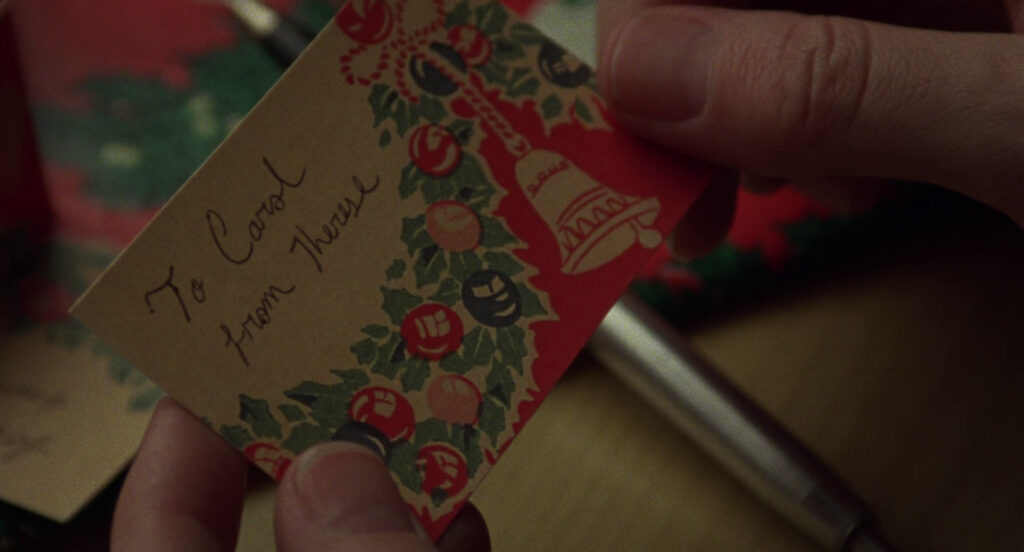
In today's article, we learn with you about shots called The Credit Card Shot, what these shots are, how they are filmed, and what are the points that we must pay attention to when filming such shots in our projects. What are the shots for The Credit Card? Let us assume that we want to film a scene consisting of short shots of a person reading a paper or browsing his mobile phone. We will have a group of shots, including a shot of the actor interacting with the opening of the paper or phone, and a shot of what the paper itself contains. How will we film the latter? What is the correct angle to do this and how can you light that shot to make it look the right way in the project?
Some of the basics: We spoke previously in a series of videos on our YouTube channel about a few basic points that are important for moving from normal video style to what can be accepted in the world of the filmmaker. These points talk about lighting angles in relation to the camera angle, setting up the lighting of the place, the mechanism of positioning the camera and taking the frame according to the place in which we are filming, the mechanism of adjusting the camera settings according to what appears to us in the shot, and the concept of the control point, and finally we touched on explaining the mechanism of distributing the lighting in a way that allows us to form contrast. To create more depth in the scene. I highly recommend reviewing these episodes and related articles as they contain important information related to our article. The Credit Card Shot The shots in which secondary elements appear are called B-Roll shots, but when we talk about exactly these shots, we are talking about a special type. This type is more like shots that show us the elements that the actor interacts with, such as papers, cards, phones, and other items. See below: An illustrative example: In the following example from the movie Countdown, specifically at second 0:36, we see an example of the Credit Card shot. Later, in the rest of the clip, we notice the use of several Credit Card shots in succession.
The mechanism of positioning these elements in the scene, and the way they are lit, is what symbolizes the overall form of the name The Credit Card Shot. These shots are arranged in a specific way according to two points: The positioning of the element according to the lighting The positioning of the element according to the scene (composition) The Credit Card Shot: Lighting is one of the important points that must be paid attention to. It is the angle of lighting in this type of shot. The lighting is always from the opposite side of the camera, in order to form shadows on the side of the camera and maintain the upstage structure in the lighting. The nature of the lighting in these shots is very soft on the displayed item, it does not form sharp shadows, and in most cases the lighting is also not directly on the item. Remember that the main goal of the shot is to show the item to the viewer. Increasing the lighting or increasing its intensity will make this difficult for us, especially if the surface we are photographing is a reflective surface such as the glass of a mobile phone screen. On the side of the camera, specifically behind it, there will be what is known as Neg, which is black fabric that blocks light reflections and contributes to forming and increasing shadows. Our use of this type of fabric will help increase the shadows on the camera side, which will allow us to create greater dimension and contrast in the shot.
Later, the background in the shot is treated separately if the visible element is separate from it, and from this we remember the necessity of maintaining the correct composition in it. The Credit Card Shot: Composition We previously spoke in a previous article and video about the importance of having different angles in the shot. The presence of angles helps create depth in the image. In the example below we notice the use of a shot of a key on a single-colored background and with a camera angle that is as close as possible to POV shots. As long as the shot serves the scene and the need for it, this is acceptable, since that is the style followed in the work, but if it is not like that, then the matter will cause us a problem, and therefore depth must be added to the shot to make it more interesting and rich in elements.
One of the most important and easiest ways to add depth to a shot is to ensure that there are multiple angles in the shot, including ensuring that the subject is not parallel to the edges of the frame, which will form angles and directing lines, thus increasing the depth in the shot. It should be noted that the composition and angles of these shots are always on one side of the actor’s shoulder. Choosing one of the two sides will be in accordance with the 180 degree rule, and it is not correct to break the rule when moving from/to Credit Card shots. In conclusion, I would like to remind you that if you find any questions, you can send your inquiries through our accounts on social networking sites.
Facebook, Twitter, Instagram, and you can also subscribe
On the Telegram channel to receive exclusive content and follow our latest updates. May you always be creative.
Did you like the article? Share it with your friends..
DROPIDEA
We hope this article has added real value to you. At DROPIDEA, we always strive to deliver high-quality content that helps you grow and evolve in the digital space. Follow us for more useful articles and guides.

Admin
DROPIDEA
Latest Articles

Microsoft Gains $3.2 Billion from Its Investment in Anthropic

Zuckerberg: Billions of People Will Have AI Assistants Within Five Years
Microsoft Enters Direct Competition Against OpenAI and Anthropic

Pangram Raises $9 Million to Detect AI-Generated Content