$750 Billion: OpenAI's Grand Bet on the Future of Artificial Intelligence
 By Admin
A Record-Breaking Technology Investment
In a move that reflects the intensity of competition in the AI market, OpenAI has unveiled ambitious plans to pour $750 billion into its technical infrastructure by 2030. This figure exceeds the company's earlier estimates from earlier this year by roughly 25%, signaling a notable acceleration in its expansion strategy amid ongoing questions about the pace of development for the Stargate data center project.
Project Camellia: The Gateway to a New Infrastructure Era
This massive spending will kick off with the construction of a sprawling data campus in the state of Georgia, dubbed "Project Camellia." With a total cost of $20 billion, the campus will span more than 1,400 acres in an area located northwest of the city of Savannah.
What sets this project apart technically is its enormous power consumption capacity. Georgia Power will supply it with no less than 3.2 gigawatts of electricity, which the company expects to be fully available between 2028 and 2032. OpenAI has explicitly committed to covering all infrastructure and electricity costs associated with the project, with no burden passed on to energy consumers in the region.
Details of the Agreement with Georgia
The agreement between OpenAI and state authorities includes a number of notable provisions:
- The company will receive a 50% property tax exemption for 15 years from Effingham County.
- OpenAI has committed to reducing its electricity consumption by up to a full gigawatt during peak periods on the power grid.
- The energy contract with Georgia Power represents approximately one-third of the additional 9,885 megawatts of capacity that the company received regulatory approval to generate last December.
Operational Power: Natural Gas Takes Center Stage
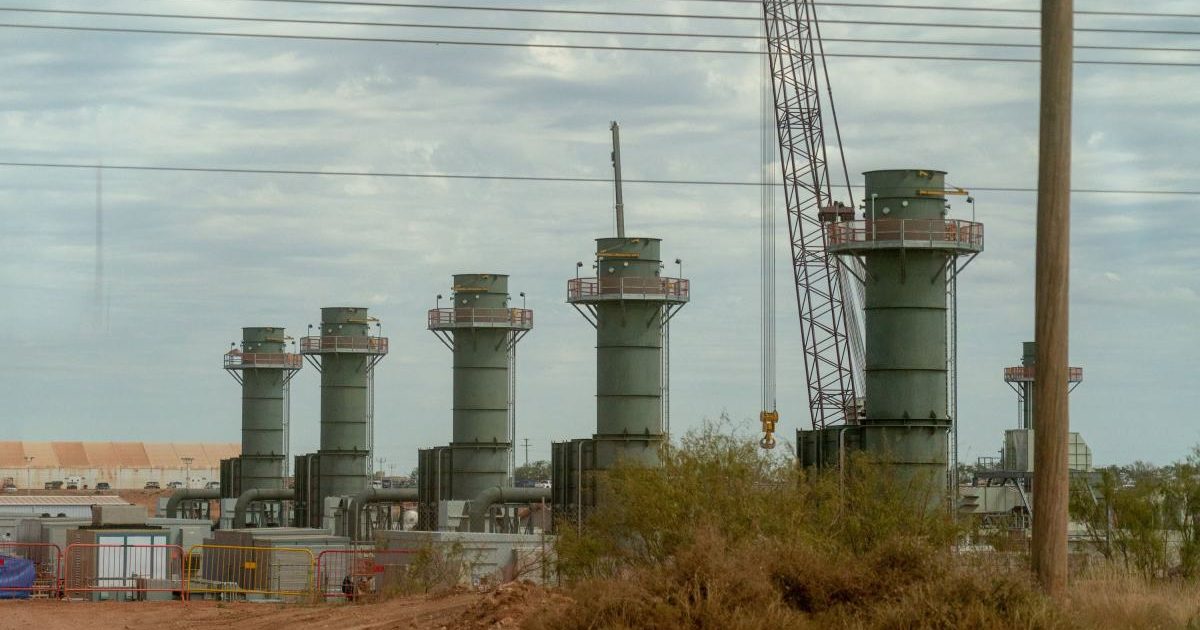
According to regulatory filings submitted by Georgia Power, the majority of the new power capacity will be generated through natural gas. The company plans to build or acquire approximately 5.8 gigawatts of gas-generated power, roughly a quarter of which will come from simple-cycle turbines with comparatively higher emissions. This will more than double Georgia Power's fossil fuel capacity, with the remainder coming from grid-scale batteries and solar energy. OpenAI has yet to clarify how the project will be supported by renewable energy sources.
The Man Who Built Colossus Now Leads the Project
OpenAI has entrusted the oversight of its data center construction to Bret Mayo, the executive who previously oversaw the record-speed construction of xAI's "Colossus" data center in Memphis. This approach may allow OpenAI to begin operating GPU units before full power availability in 2028. However, the Colossus experience was not without its problems — xAI faced lawsuits over the operation of unlicensed gas turbines and alleged impacts on air quality in the surrounding area.
Reading the Bigger Picture
This enormous level of spending reveals a clear equation: generative AI demands massive infrastructure, and OpenAI is betting that compute capacity is the single greatest barrier to market dominance. Yet this bet comes with serious questions about the balance between technological expansion and its environmental costs — particularly given the heavy reliance on fossil fuels to power these large-scale computing operations.
✦ بقلم فريق دروب أيديا
DROPIDEA
We hope this article has added real value to you. At DROPIDEA, we always strive to deliver high-quality content that helps you grow and evolve in the digital space. Follow us for more useful articles and guides.
Tags
Admin
DROPIDEA
Latest Articles

Recursive and Amazon Sign $410 Million Computing Deal

Fish Audio Raises $52 Million to Build AI Voice Models for Creators and Enterprises
Power Cuts to Data Centers to Protect the US Grid from Collapse

Claude's Private Conversations Appeared on Google: What Happened?