Dario Amodei: We're Not Against Open Models, But Chinese AI Worries Us
 By Admin
An Official Clarification Amid Industry Controversy
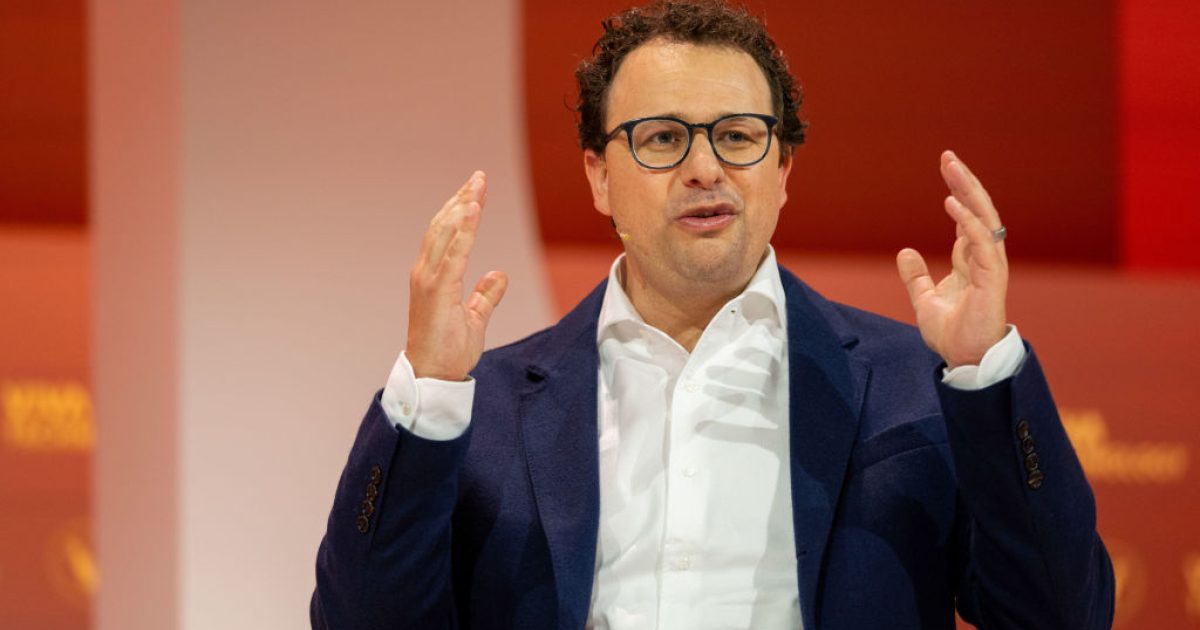
Dario Amodei, founder and CEO of Anthropic, did not hesitate to respond to the wave of speculation circulating in AI circles — some of which suggested his company was backing US government efforts to ban Chinese open-weight models, or perhaps open models altogether. Amodei published a direct statement affirming: "Anthropic has never called for a ban on open-weight models," adding that a review of his previous writings is sufficient to confirm that he does not consider such a ban a worthwhile measure.
Context of the Industry Debate
This clarification came in the wake of an open letter published by Nvidia and several major AI companies — including Meta, Microsoft, Mistral, and Hugging Face — urging policymakers not to impose sweeping, premature restrictions on open-weight models. The letter marked the first tweet posted by Nvidia CEO Jensen Huang on platform X. Although the letter made no explicit mention of China, the broader industry discussion centered on concerns about the growing capabilities of Chinese laboratories, particularly through the technique of "distillation" — a method that allows one AI model to absorb the workings of another by bombarding it with massive volumes of queries.
Open Models: A Public Good, Not a Threat
Amodei drew a clear distinction between open-weight models on one hand and the Chinese threat on the other, viewing them as two separate issues that should not be conflated. In his statement, he said: "Open-weight models that lack dangerous capabilities represent a public good; they cost nothing beyond the compute needed to run them, and they deliver real value to developers, researchers, and businesses."
He clarified that companies using open-source models — even Chinese ones — does not fall within his primary concerns at this stage.
What Does Amodei Actually Fear?
Amodei's genuine concerns revolve around far more serious and strategically consequential scenarios, which can be summarized as follows:
- Lasting Military Superiority: He fears that authoritarian governments could develop AI models that surpass their American counterparts, granting them an entrenched long-term military advantage.
- Domestic Repression: The use of AI as a tool for controlling populations and suppressing dissent.
- Biological Attacks: Amodei believes AI could enable actors to carry out biological attacks — a threat he considers more severe than conventional cybersecurity risks.
He noted that the Chinese Communist Party is not the only authoritarian entity that concerns him, but described it as "the most capable" in this context. He also highlighted that open models carry particular risks in these scenarios, given the difficulty of applying security controls to them and monitoring their use, citing a report from the UK AI Safety Institute confirming that open-weight models cannot be retracted once released.
Proposals to Counter Chinese Influence
Amodei proposed a number of measures to address what he describes as the Chinese threat, the most notable of which include:
- Continuing to restrict China's access to advanced chips — a US policy that has been in place for several years.
- Taking an official and firm stance on the practice of distillation, treating it as a form of intellectual property theft.
- Supporting the establishment of an independent international body for AI model safety testing, with jurisdiction covering all countries worldwide, including China.
A Bet on Possible International Cooperation
Amodei noted that he sees something close to an industry consensus around the idea of unified international model testing, praising recent moves by the US administration in this direction as well as industry proposals calling for such testing to be applied to the most capable models regardless of their country of origin or whether they are open or closed.
He concluded on a note of cautious optimism: "Limited cooperation on preventing AI bioweapons may be achievable, because it serves China's interests too." This position reflects an awareness that shared interests can sometimes serve as a bridge toward international agreements in areas of the utmost sensitivity.
✦ بقلم فريق دروب أيديا
DROPIDEA
We hope this article has added real value to you. At DROPIDEA, we always strive to deliver high-quality content that helps you grow and evolve in the digital space. Follow us for more useful articles and guides.
Tags
Admin
DROPIDEA
Latest Articles
Recursive and Amazon Sign $410 Million Computing Deal
Fish Audio Raises $52 Million to Build AI Voice Models for Creators and Enterprises
Power Cuts to Data Centers to Protect the US Grid from Collapse

Claude's Private Conversations Appeared on Google: What Happened?