A Startup Founder Faces Cancer with AI: A Story of Digital Resilience
 By Admin
When Health Data Isn't Enough to Protect You
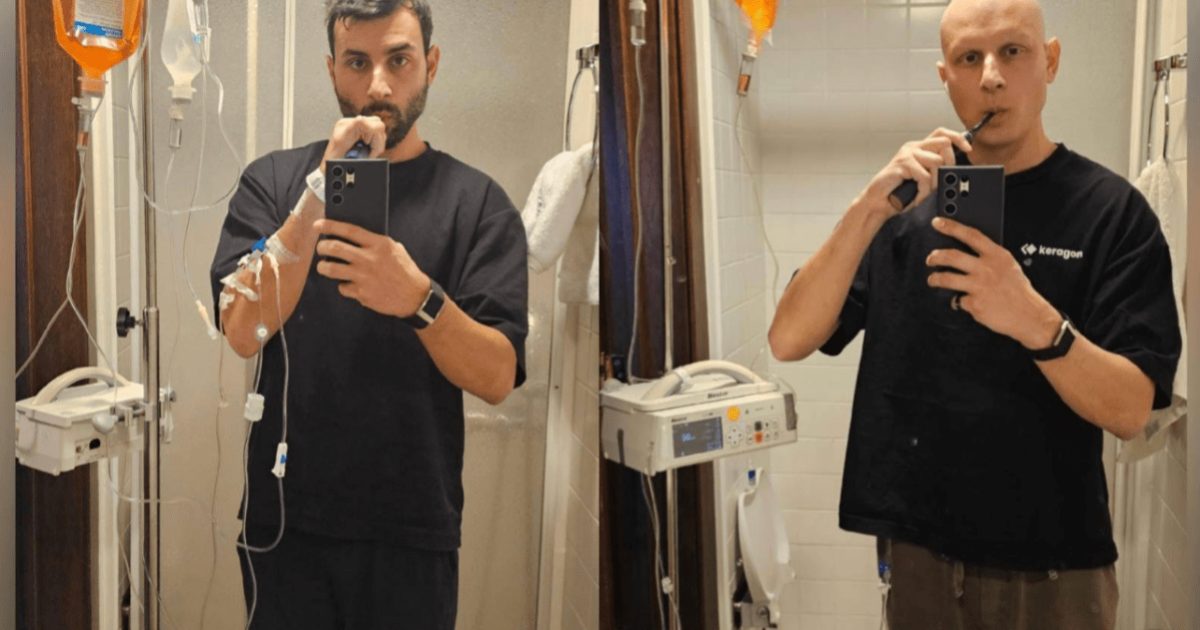
Kuno Kristo believed he was doing everything right. For years, he had worn sleep trackers, conducted nearly a hundred biomarker tests annually, and kept up with the latest longevity research. At thirty-five, building his second company, he embodied the archetype of a founder obsessed with optimizing his biological performance. By every measure, his last checkup in 2025 had come back perfect.
Then came the moment no one anticipates. It started with mild symptoms he dismissed for a week, until his doctor discovered two venous clots and scheduled surgery. Preliminary tests, however, brought everything to a halt — revealing a massive mass behind the sternum measuring 11×11×8 centimeters. A tissue biopsy confirmed aggressive non-Hodgkin lymphoma in a rare form, a diagnosis affecting roughly one in every 420,000 people, caused by a random genetic mutation unrelated to lifestyle or diet. The tumor had not existed approximately three months earlier and would have reached stage four within another three weeks.
When Specialists Disagree
Kristo quickly found himself facing a bewildering medical reality. His first specialist recommended a mild chemotherapy regimen and scheduled the first session for three days later. Yet on the eve of treatment, he sought a second opinion — and received a completely different recommendation: intensive chemotherapy, administered via continuous inpatient infusion over six months.
The difference was anything but marginal. The success rate for the mild protocol stood at roughly 60% for his specific case, while the intensive protocol pushed that figure to 85%. Two world-class specialists, two entirely contradictory recommendations.
Kristo refused to simply defer to either. Within two days, he gathered twelve consultations from physicians across the United States and abroad, drawing on his professional network. Eleven of the twelve voted for the intensive protocol. He chose the harder path — not out of bravery, but out of logic. "As founders, we hold the decision-making reins," he says. "You hear many opinions, and you have every right not to accept the first one without scrutiny."
AI as a Partner in the Treatment Journey
Over six months of treatment, Kristo approached his chemotherapy the way he approaches building a startup: defined cycles with clear timelines and measurable weekly performance indicators. He wore his tracking device throughout treatment and found it accurately anticipated the days his immune system would dip before symptoms appeared. He logged every symptom, dose, and reaction daily through voice recordings, focusing on three pillars: sleep, nutrition, and mental state. "The last one matters more than anything else," he says. "I never once asked myself why me — that question has no useful answer."
Kristo fed the AI model Claude everything he had: blood results, tracker data, imaging reports, and daily symptom notes. He wasn't looking for a substitute doctor but for a tool that would help him ask the right questions of his human physicians. For a rare condition that a specialist might encounter only once a year, having access to a model trained on the full body of medical literature was incomparably superior to a standard internet search.
The Final Scan and the Misdiagnosis He Avoided
The real test came at the end of treatment. The concluding PET scan — the imaging used to detect active disease — returned ambiguous results, prompting his treating physician to speak of a potential second line of therapy that might include radiation near the heart and lungs.
Kristo researched again and uncovered a troubling figure: the false-positive rate for end-of-treatment PET scans in this type of cancer is approximately 60%. When he fed his three scans and MRI images into Claude, the model flagged a documented but easily overlooked phenomenon: in patients under forty recovering from this type of cancer, thymic rebound activity can occur after chemotherapy, appearing in imaging as active disease. The model estimated a roughly 90% probability that this was the correct explanation — giving Kristo the grounding to engage his physician with precise, evidence-based questions.
A Lesson Data Alone Could Not Teach
Kristo's experience does not present AI as a replacement for medicine. It raises a different question: how can a patient equipped with today's tools shift from passive recipient to active partner in their own treatment decisions? Many experts rightly caution against relying on AI models for medical diagnosis. But there is a fundamental distinction between a model that diagnoses and one that helps a patient understand the evidence and formulate better questions.
- A single consultation may not be sufficient for rare or complex cases.
- Tracking health data is valuable, but it is no substitute for regular medical checkups.
- AI is a tool for better communication with your doctor, not a replacement for one.
- Detailed symptom documentation gives patients a clearer voice in the treatment room.
Today, having completed treatment, Kristo is returning to his life and his venture from Athens, carrying a lesson that resists reduction to any single biomarker: data protects you, but the will to understand and to question is what carries you through when every plan falls apart.
✦ بقلم فريق دروب أيديا
DROPIDEA
We hope this article has added real value to you. At DROPIDEA, we always strive to deliver high-quality content that helps you grow and evolve in the digital space. Follow us for more useful articles and guides.
Tags
Admin
DROPIDEA
Latest Articles
Pangram Raises $9 Million to Detect AI-Generated Content
Encore AI تجمع 30 مليون دولار لبناء وكلاء ذكاء اصطناعي يتعلمون من مكالمات العملاء
Hint: The AI-Powered Home Management Assistant with Martha Stewart's Touch
Startup Runlayer Accuses Rippling of Stealing Its MCP Product Idea