General Data Protection Regulation (GDPR) and its use for Arabic websites
 By Admin

The names of your customers, their email addresses, their phone numbers, their locations, their credit card information, and other data that you collect about your customers. From now on, you must have a clear justification for collecting and storing them, and you must clarify the processes through which you process this data, with your customer’s approval, and make sure he knows where, how, and why you collect this data. Otherwise, your business may be harmed by heavy penalties! This is what the General Data Protection Regulation, which was enacted by the European Union to protect the data of its citizens, dictates to you. Have you heard of this regulation before?
Do you think now why we are talking about it in an article here?
What is its relationship to your business? Well, we will answer these questions one by one in this article.
Article contents
Definition of the General Data Protection Regulation GDPR The regulation and Arab website owners The most important provisions of the regulation How to fit the site with the regulation The most important GDPR additions Using the (Cookie Notice & Compliance for GDPR/CCPA) add-on
Definition of the General Data Protection Regulation (GDPR).
The European Union issued a long list of laws amounting to 88 pages, which were proposed and discussed during the years 2016-2018 until they were issued in their final form. It is a set of laws that protect European Union citizens from misuse of their personal data. What is meant by personal data? Information that may lead in some way to identifying a specific person, such as name, bank data, race, gender, and many others, is considered private information and citizens have the right to fully control it and not allow it to be used except within the scope they accept, so this was the General Data Protection Regulation. As long as this is the right of your customers, violating these laws will directly affect your business activity, as the penalties for paying up to 4% of the company’s annual income may lead to bankruptcy, and this is not the only penalty, of course, and whatever the penalty is, this is what we do not want for website owners, and in order for us to contribute to avoiding these penalties, this article was.
The list and the owners of Arab websites. You may be wondering, as long as it protects European Union citizens, do you, as the owner of an Arab website, take care of this list and take it seriously? Or is it something that does not concern you? If you have visitors who are citizens or residents of the European Union, or if you aspire to be global, you allow payment on your site in the European currency or provide a copy of your site in one of the European languages, and if you deal with a company in the European Union countries using data processing and analysis services, and even if this company is outside the European Union but its site complies with the regulation, then this is something that will help you completely, and you should never neglect it, and you must make your site compatible with the regulation to avoid any penalties or Unexpected fines.
Google Analytics, for example, has changed its policy to comply with the rules of the regulation, and therefore many sites that use Google Analytics will be required to change their policies in order to be able to benefit from the services to the fullest. The most important provisions of the regulation: We must first clarify the most important provisions of the regulation that directly affect your business activity, and what you are responsible for regarding it, and they are as follows: Clear consent: This is a proven, confirmed, and indisputable consent that the site owner takes explicitly from the data subject, who is the site visitor, in exchange for collecting, saving, and using the data in specific written and documented forms.
The data subject has the right to download all his data, or delete it if he wants to stop his subscription to your site. The data subject or visitor has the right to know how the data is protected. For example, he can know how to encrypt the data and ensure that it is properly protected. Parental consent if you are handling data from people under 16 years of age.
The data subject has the right to know about any data breach within 72 hours, and to inform the competent authorities of this breach. Data can only be used for the purpose for which it was collected and is securely deleted after it is no longer needed. WordPress and its related sites, such as the WordPress blog, the WordPress community site, the WordPress template store, and the e-commerce site WooCommerce, are among the sites that have been affected by the General Data Protection Regulation, despite their presence outside the European Union countries. Therefore, of course, you, as the owner of a website or even a blog on WordPress, will have to be affected by the regulation, and therefore you must take serious steps to make your site or blog conform to the rules of the regulation to avoid undesirable fines.
How to adapt the site to the list. Now things have become clear, and we have become aware of the importance of the list, the extent of its impact on our sites created on WordPress, and the consequences of violating its rules. So how will we be able to adapt our sites to the list? Due to the differences in sites and the data that is collected and stored, the means of adapting a site to GDPR rules vary depending on the nature of the site. Fortunately, WordPress version 4.9.6 is compatible with GDPR rules, so you will have to make modifications as required by the version. Among the improvements that WordPress has taken in this area are:
Comment approvals box: When commenting anywhere on a WordPress site, commenters’ information, such as their names and email addresses, is stored with the site owner, so WordPress added an option for commenters to allow or not allow the site to store this information through a mandatory check box upon each comment.
Privacy Policy Templates:
It is a set of templates that include the basic parts of the privacy policy that comply with the rules of the General Data Protection Regulation (GDPR), and you can also customize them and add what you find appropriate to the needs of your site in compliance with the GDPR. Data management features: You can give users greater control over their personal data, as they can download and delete their data whenever they want.
You can find it through the (Tools) tab in the main control panel, then (Export/Clear Personal Data). Availability of new plugins: WordPress has added plugins that help website owners comply with GDPR rules based on differences in the data they store, which cannot be met by WordPress updates alone.
As we said, WordPress self-updates alone are not sufficient for GDPR approval, and we must need add-ons that contribute to this purpose. There are many add-ons and you may be confused between them, so we will talk here about the most important of these add-ons from the writer’s point of view, which does not necessarily mean that they are the most important in the entire field, and then we will learn how to install one of them. The most important GDPR additions: When searching among the additions to the GDPR abbreviation, we will find these additions in the first results, so we will talk about them one by one, and we will install the addition (Cookie Notice & Compliance for GDPR / CCPA).
Complianz – GDPR/CCPA Cookie Consent: This add-on takes full care of cookies, allowing the display of a notification that gives the user the options to accept and reject the use of cookie data as well as additional options for consent based on classification. You can also create a cookie policy from scratch using an easy wizard with the help of an IT law firm, and perform periodic cookie scans. CookieYes | GDPR Cookie Consent & Compliance Notice (CCPA Ready): It is currently operated by more than a million users, and this definitely indicates its efficiency. It gives users high control over cookie data, as it provides options to approve and reject the use of cookie data. Through it, you can display all the cookies that your site uses with high organization and accuracy. You can design cookie notices to suit your site in terms of font, colors, size, etc. Cookie Notice & Compliance for GDPR / CCPA: Active installations of this add-on reach over a million, and it provides a new framework for taking user consents based on the latest updates to laws from more than 100 countries around the world, to always keep you safe in compliance with the laws.
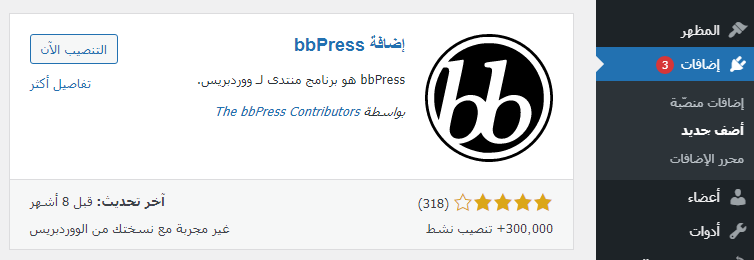
GDPR Cookie Compliance (CCPA ready): This add-on shares with its predecessors the provision of a completely customized design based on your location for the cookie data notice, and it increases the ability to reset settings and revoke consent, and gives you a link to the privacy policy site so that the user can know what cookie data is being used, in addition to the ability to download it to mobile phone devices. After learning about the most important add-ons that help in complying with the rules of the GDPR, let us explain practically how to install one of these add-ons. As we mentioned, all add-ons share the basic role that they play in complying with the laws of the regulation, and the installation of any of them remains available to you according to your personal preference. Here we will install the add-on (Cookie Notice & Compliance for GDPR/CCPA) for its ease of setting and due to its high evaluation by its operators. Using the add-on (Cookie Notice & Compliance for GDPR/CCPA) We first go to your control panel window, then click on (Add-ons). The previously existing add-ons window opens and we click on (Add New) located at the top right of the screen.
Obviously, a window will appear for us containing the latest additions, and we will search for the required addition in the search box located at the top left of the screen, where it will appear to us quickly. Then we simply click on (Install Now) next to the addition, and wait a little while, then we are given the option to activate, so we click on (Activate), which will replace the (Install Now) box. After activation, the site will take us to the installed add-ons window, and the add-on will be among these add-ons, and this indicates the success of the installation and activation processes. After installing the add-on, it will appear in the sidebar under the settings, and when you click on it, it will give us a quick test of the site and its degree of compliance with GDPR and CCPA rules. In our case here, it appeared that compliance with the rules is incomplete, but this does not prevent us from setting up the add-on for our site. You can bypass it by choosing (skip for now) and register whenever you want, and this problem may not appear to you at all, and this is what we hope for you.
Moving to the bottom of the screen, we will find the settings for the add-on that we will work on. We will first find the message box, which is the message that will appear to site visitors within the cookie notice, informing them of your use of cookie data, and you can formulate the message as you wish. It is recommended that the message be direct and unambiguous, informing the visitor of the need to use the data and asking him for permission to use it. Followed by (Button text), which is the box that will appear to the visitor within the cookie notice. The visitor gives you consent to use his data by clicking on it and the notice disappears. We come to the next important section, which is the privacy policy option. It is a button that also appears within the cookies notice for visitors and takes them to your privacy policy page when they click on it, so that they are more informed about your policy and your uses of cookie data, in addition to including topics about the rules of the General Data Protection Regulation and other protection policies.
Its settings appear when activated by placing a check mark in the check box parallel to it, and they are as follows: 1- The sentence or word that you want to place above the button, and it is most appropriate that it expresses what the page contains, so it is usually the Privacy Policy. You can change it, of course, if there is another expression that suffices for the purpose, and we will leave it as it is. 2- Here you choose which page you want to send the visitor to when he clicks on the (Privacy Policy) button prepared a moment ago. Either send him to a specific page on your site, or to a link designated for this purpose that is not present on the page. 3- This option depends on your previous choice. If you choose a specific page link (Page Link), it will make you specify which page of the site you want to direct the writer to. If you have designed a page to display the privacy policy on your site, select it. You can also choose to synchronize the page’s privacy policies with the Privacy Policy page in WordPress.
If you choose (Custom Link), a box will appear for you to write the link in and save it. 4- The (_self) option allows the privacy policy page to be opened in the same current tab when clicking on the privacy policy button, while (_Blank) allows the page to be opened in a new tab. 5- Finally, you can choose how to display the notification, either in the form of a message that appears somewhere on the site page, or in the form of a banner that appears either at the bottom or top of the page.
After completing the privacy policy settings, we will move to the option of giving the visitor the right to refuse the use of his data by you. You can write whatever expresses your refusal as you wish after activating it by placing a check mark next to it. It is recommended to activate it to give the visitor greater confidence and freedom to choose. The add-on provides the option to revoke consent even after clicking on the consent button. In order for this feature to work, you must activate the previous option (Refuse consent). You can write the text of the message you want to send to the visitor so that you inform him of the availability of this option, then choose the word that will appear above the revoke consent button, then choose the method of displaying the revoke consent button. Either it is within the notification or manually using the programming shortcut [cookies_revoke], and it is preferable to have it displayed automatically within the logo. Followed by the script unit, which is a combined programming sentence that works as a single unit that may act as a link between your site and other sites, such as Google Analytics, so that it is provided with programming sentences from Google and placed in the (head) or (body), to allow Google to access the data you store, analyze it, and then display it to you. These are advanced settings for programmers.
Next comes the option to reload the page after the visitor agrees to your use of his data. Whether or not he chooses depends on the nature of your site or your design. Then come the options for obtaining consent from the visitor, which are actually devious methods and are not recommended to be followed because they are not direct and may occur unintentionally or consciously on the part of the visitor. They are either through browsing (on scroll) after a certain number of pixels that the visitor browses, or obtaining consent when the visitor clicks anywhere on the page (on click). The validity of consent (accepted expiry) refers to the period for which you store the data of visitors who agreed to use the data, and the period starts from one hour to infinity. As for the expiry of no consent (rejected expiry), it refers to the period of time for which you store the data of the visitor who did not agree to the use of his data. You can choose the location where the text of the addition appears, either in the header or in the footer. You can also disable the operation of the extension, which will result in the deletion of all your stored data in case Deactivation. At the end of the settings, we reach a section for designing the shape of the notification. You can specify its location on the page at the bottom (bottom) or at the top (top), and then choose how to display the notification dynamically. Either it is displayed on the screen with a sliding movement (slide), disappearing (fade), or without any movements.
Then you can choose the appearance of the button, so it can be either dark, light, or without an appearance. To allow greater customization of your notification, you can set a unique format through the CSS class, then choose the color of the text of the notification message, then the color of the notification bar, and determine the degree of opacity for the bar so that the less opacity it becomes transparent, the more what is behind it will appear. After you have finished adjusting the settings and ensuring they are correct, you will save the changes you made, and the following message will appear to you after clicking Save at the top of the screen.
Conclusion
Here we have completed our talk about the General Data Protection Regulation, its impact on WordPress users and the importance of complying with its rules. Then we went on a tour of the most important plugins that greatly help in complying with the General Data Protection Rules for user data. We shared with you how to install one of the most important plugins that provide this service, and as we mentioned previously, full compliance with the General Data Protection Rules. It may be somewhat complicated and may require you to hire a lawyer, take serious legal advice, and work on implementing it little by little, but installing these add-ons may help in this very well, so we hope that it will be a useful and interesting article.
DROPIDEA
We hope this article has added real value to you. At DROPIDEA, we always strive to deliver high-quality content that helps you grow and evolve in the digital space. Follow us for more useful articles and guides.
Admin
DROPIDEA
Latest Articles

Nscale Acquires Anyscale for $1.65 Billion to Expand Its Dominance in AI Infrastructure

How Is AI Accelerating Meta's New App Launches?

Okta Acquires Security Firm Permiso for Around $200 Million

Microsoft Gains $3.2 Billion from Its Investment in Anthropic