American Autonomous Vehicles Enter the Fight in Ukraine
 By Admin
An Unprecedented Field Presence
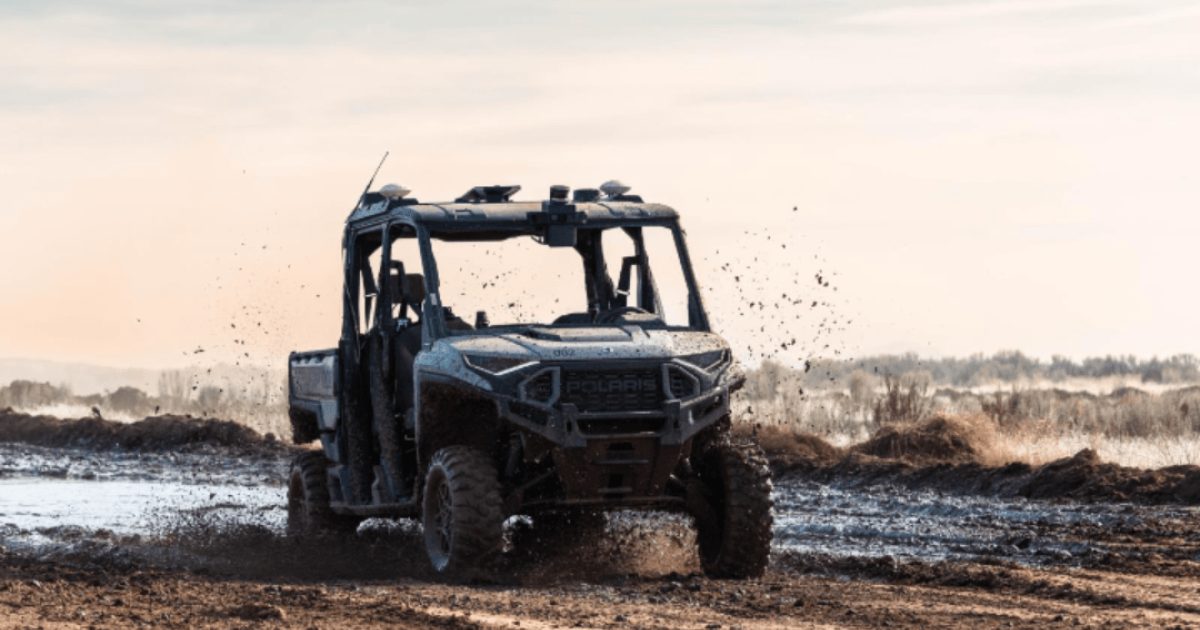
American autonomous vehicle developer Forterra has revealed a surprising disclosure: more than one hundred of its autonomous ground vehicles have been operating in Ukrainian conflict zones for over nine months. According to the company, this deployment represents the largest operational fielding of autonomous ground vehicles ever conducted by a U.S. defense company in a war zone.
Why Now? Why Ukraine?
The saturation of the Ukrainian battlefield with drones has created a new reality — vast areas are under constant aerial surveillance, making any human movement exposed and dangerous. A U.S. Army staff sergeant overseeing the development of autonomous vehicle tactics describes the situation bluntly: "There's nowhere to hide. You're vulnerable to FPV drones, missiles, artillery, and everything they've got." This mounting pressure has pushed Ukrainian military planners to seek a safer alternative: ground autonomy.
The Lancer Vehicles: Specs and Field Performance
Forterra builds on commercial Polaris vehicles as a base platform, then integrates a purpose-built suite of sensors and computing systems. These vehicles run on fuel rather than batteries, giving them a payload capacity of up to 750 kilograms — compared to just 250 kilograms for locally produced Ukrainian counterparts.
Field figures reveal a notable performance record over the deployment period:
- More than 4,000 kilometers traveled across a wide range of missions
- Over 1,100 missions completed
- The equivalent of 352 metric tons of supplies and equipment transported
- 52 medical evacuations of battlefield casualties
One Ukrainian soldier who worked alongside these vehicles was openly impressed, calling them "the most important asset on the ground, bar none" in supporting Ukrainian defensive lines.
A Reality Check: Full Autonomy Hasn't Arrived Yet
Despite the documented achievements, field experience reveals a genuine gap between what these vehicles can do today and what the battlefield actually demands. Ukrainian troops operate them remotely in most cases — not autonomously — for two reasons: their high cost makes losing one expensive, and they are not yet capable of responding to sudden, dynamic threats.
One Ukrainian soldier summed up the problem clearly: "We need to respond to enemy threats instantly, face-to-face with the enemy — and the autonomous system doesn't know how to do that yet." In other words, a vehicle can navigate rough terrain on its own, but it cannot identify unknown hostile forces and make an appropriate decision in response.
The Development Roadmap: Merging Robotics with AI
Forterra is working to overcome these limitations by combining classical autonomous navigation algorithms with generative AI models capable of adapting to unpredictable environments. The road ahead is not straightforward, however. The company points out that certain combat tasks — such as navigating minefields or interacting with weapons systems — have no publicly available training data, simply because they are not human skills that can be scraped from the internet.
Competition among U.S. defense tech firms is intensifying in parallel, with companies such as Scout AI, Field AI, and Overland AI all racing to build comparable systems — signaling a promising market for national security contracts.
Field Adaptation: Adding Starlink Changes the Equation
The Ukrainian experience has shown that technology alone is not enough. Ukrainian forces initially found that the vehicles were built to high American standards that did not always match their operational requirements. But one straightforward addition transformed the picture: fitting a Starlink antenna for satellite internet connectivity, enabling remote operation and over-the-air software updates from secure locations. This lesson illustrates an important truth — integration with available digital infrastructure is just as critical as the vehicle's core technology itself.
Conclusion: A Necessary Investment with Clear Limits
Forterra's experience in Ukraine offers practical proof that ground autonomy is not a distant dream but a graduated reality — one that requires continuous refinement in light of real battlefield challenges. Autonomous vehicles are already saving lives, but they need to be cheaper, smarter, and more capable of independent initiative. That will ultimately be decided on future battlefields, not in research centers.
✦ بقلم فريق دروب أيديا
DROPIDEA
We hope this article has added real value to you. At DROPIDEA, we always strive to deliver high-quality content that helps you grow and evolve in the digital space. Follow us for more useful articles and guides.
Tags
Admin
DROPIDEA
Latest Articles

Pangram Raises $9 Million to Detect AI-Generated Content

Encore AI تجمع 30 مليون دولار لبناء وكلاء ذكاء اصطناعي يتعلمون من مكالمات العملاء

Hint: The AI-Powered Home Management Assistant with Martha Stewart's Touch

Startup Runlayer Accuses Rippling of Stealing Its MCP Product Idea