The reasons why a website does not appear on Google is that there is no search engine that guarantees the indexing of your site. Moreover, no one promises that the website holds good positions in search results, in fact, often the website does not manage to reach search results, despite all efforts, and it is not clear why this happens and there can be a lot of reasons here we explain only some of them. Contents of the topic Toggle The most important reasons why the website does not appear on Google Explanation of the reasons why the website does not appear on Google 1. The website is not archived 2. You do not have incoming external links 3. Your keywords are very popular 4.
Your site is new 5. NOINDEX directive 6. The site is not optimized for search engines 7.
Penalties and pessimism 8. The content does not reach the target audience. What does website optimization include? Conclusions Top Reasons Why Your Website Doesn't Show Up on Google You've worked hard and created your own website and now you want to share it with the public. The site looks great, has exclusive content, your content appropriately reflects your brand message, and your CTA looks as engaging as possible.
Now you enter keywords into Google search, hoping to find your site, but they are not on the first page of results, or even on the second page. Why might this happen? Google has not archived your site yet. There are no internal links contained on the site.
The keywords are duplicate and very popular. The content is inappropriate or does not reach the target audience. The site is not optimized.
Explaining the reasons why a site does not appear on Google These are just a few of the many possible reasons why Google may rank a site low. Let us think about these factors and try to eliminate them. 1. The site is not archived Sometimes search engines take a long time to archive the site and update the search results and this can mainly relate to new sites with little content and backlinks.
Archiving is not difficult to achieve. First, you need to fill the site with activity or unique content. Secondly, external links will significantly speed up the process.
Third, a site can be “forced” to be archived in popular search engines using tools available to webmasters. Google will automatically archive the pages, but this may take some time. Google offers some methods to speed this up, but there are no quick or universal rules on how long indexing can take.
You can use Google Search Console to avoid your website not showing up on Google. You can also add your site to Google My Business. After the site is archived, it will take some time.
Search engines do not guarantee that every archived site will be included in search results, especially in the first positions. Even if everything is done “according to science,” updating search results and assigning rankings to new site pages takes time. Read also: Website space 2. You do not have incoming external links If your site is new, you need to increase the number of incoming external links to it.
Inbound links are links from external sites. They are very important because they show your “authority” on the internet. However, the most site owners will go to is sending messages asking them to post a link to their site. Google may mark this as spam, and it will get worse so it's better not to do it.
The best way to get inbound links is to create
Content shared by users. It takes some time, but it is the only effective way to get your website visible on Google. 3.Your keywords are very popular. Let’s say your company sells casual clothes. Don’t rely on the keywords “casual clothes” because they are so broad and popular. It will be difficult for you to “break through” those who have already ranked first for them.
Keywords should be specific and “narrowly focused.” Understand which queries about your topic are most popular and which ones you can focus on. According to one Moz study, popular keywords typically account for only 30% of all searches.
The remaining 70% contain rather long and specific sentences, for example, “winter jacket for cold weather” or “blue winter jacket with colorful feathers.” Analyze your competitors and find their keywords that the audience finds them by so you can have your website not show up on Google. This can be done using SEMrush.
4. Your site is new The so-called “sandbox” is a speculative algorithm (the existence of which is denied by search engine representatives), which prevents the ranking of new sites. Whether this algorithm exists in reality or some other objective factors hinder new sites is not so important.
The main thing to remember is that it will take about a month and a half for the new site to reach search results. This process can be delayed in some circumstances and vice versa. With effort, it is quite possible to bypass the “sandbox” and enter search results “on the go”. On the other hand, a new site usually requires serious optimization, content filling, and backlinks, so there is something to do in the early stages, and there is usually no rush.
If a site is archived before it is ready, negative consequences may follow. 5. NOINDEX Directive The NOINDEX directive, which can be written for each page of the site, prevents search engines from indexing it.
This directive is usually placed on service pages that should not be searched. Sometimes, by mistake, this directive is misplaced, and as a result, your website doesn't appear on Google. 6.
The site is not optimized for search engines. After the site is sent for archiving, the “net” crawls it, carefully examines it and views the site as a visitor. Content, meta tags, importance, keywords, semantics, site structure and many other factors were studied. If a site is not properly optimized, the search engine may decide not to include it in the archive, let alone in search results.
SEO helps a site get indexed, reach search results and take good positions. 7. Penalties and pessimism Search engines can remove a site from search results or pessimize it so that its rankings are not very high.
This happens when a site violates our webmaster guidelines. If the site is not getting traffic despite all efforts, it is worth checking to see if any penalties have been imposed. Correcting the situation in this case is not difficult, the main thing is to find the reason.
Unfortunately, in the vast majority of cases, the search engine does not provide information on the reasons why a website does not appear on Google, therefore, experience and knowledge are required to find them. 8. Content is not reaching the target audience Now, Google is increasingly “moving away” from keywords and shifting the focus on the relevance and relevance of the content. It is important to focus on a specific audience and try to create a website for that audience.
Write in a language that your potential customers understand, even if it's not close to you or doesn't sound good enough. Try to attract the user to the content and come back again, because no great article will be useful for your traffic if you rarely update the content. The site is not optimized.
What does website optimization include? Speed: It is important to ensure that your site is fast to affect this. Do not download “heavy” videos and images, but first compress them in special programs. Also, speed can be affected by increased browser caching and reduced CSS and Javascript. Mobile devices: The site should be mobile-friendly Google PageSpeed Insights will help you understand your site's weaknesses and what can be fixed.
Failure monitoring: If a user visits the site and then immediately leaves, this may indicate that something is not working for you or that the content does not match the title. Title Tag: This is the HTML element that defines the title of each of your pages. This tag appears on the search engine results page (SERP) and should be an accurate description of the content on the pages. It must be no longer than 60 characters for the page to display correctly in search results.
Avoid repeating and pasting multiple keywords into your title tags. Make sure to give each page a unique title to match your content. Conclusions There are many reasons why a website does not appear on Google that may lead to and the main difficulty here is to find out the reason. It often happens that site owners make a lot of effort in order to continue moving their sites to a site, but the efforts are made in the wrong direction in this case it is recommended to contact a specialist.
#Reasons why your website is not showing #Your website is not showing
DROPIDEA
We hope this article has added real value to you. At DROPIDEA, we always strive to deliver high-quality content that helps you grow and evolve in the digital space. Follow us for more useful articles and guides.

Admin
DROPIDEA
Latest Articles

Nscale Acquires Anyscale for $1.65 Billion to Expand Its Dominance in AI Infrastructure

How Is AI Accelerating Meta's New App Launches?

Okta Acquires Security Firm Permiso for Around $200 Million
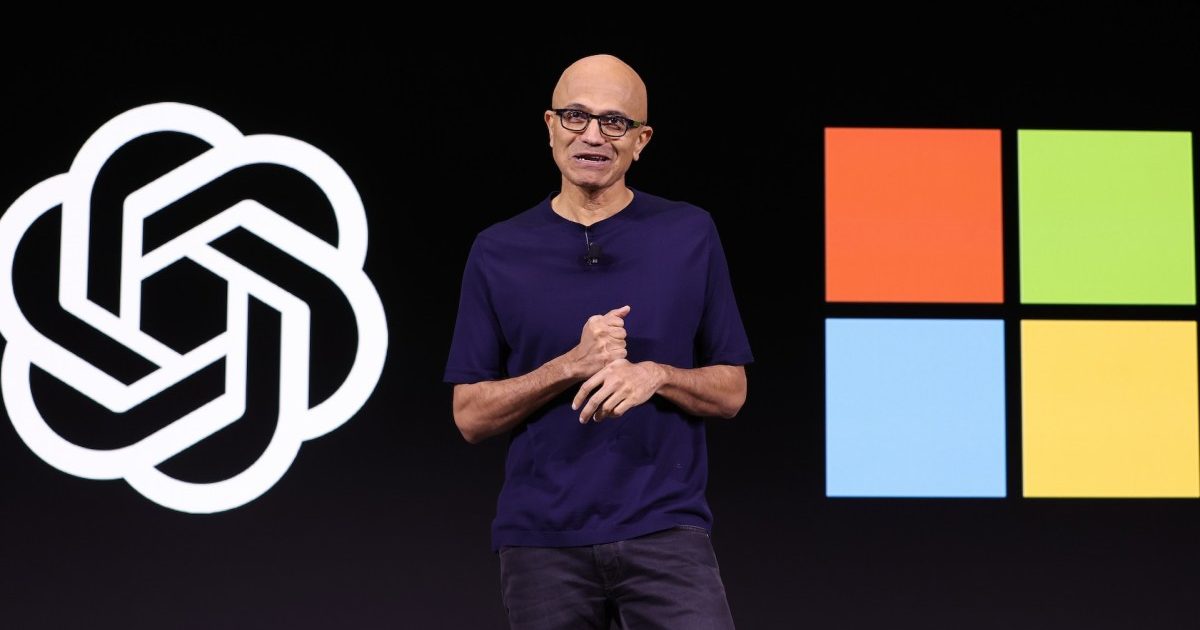
Microsoft Gains $3.2 Billion from Its Investment in Anthropic