Ford Brings Back Veteran Engineers After AI Fails to Deliver
 By Admin
When Algorithms Fall Short of Human Expertise
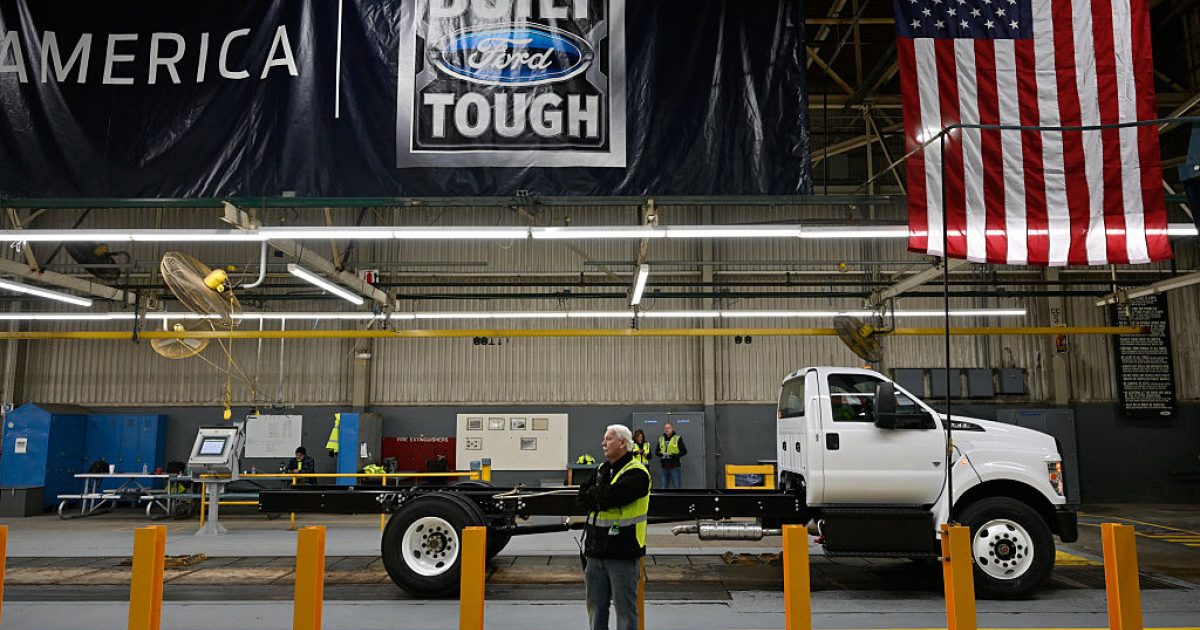
In a striking development that highlights the limits of AI applications in precision manufacturing environments, Ford Motor Company announced it has brought in approximately 350 long-tenured engineers — some former employees, others from its supplier network — following a noticeable decline in product quality attributed to over-reliance on automated systems and AI tools.
A Frank Admission of Technology's Limits
Kumar Galhotra, Ford's Chief Operating Officer, revealed that the company had been placing increasing trust in automated quality systems, only to find the results fell short of expectations. He noted that Ford's response was to bring in technical specialists tasked with identifying component defects before they reach assembly lines — sparing the company the far costlier burden of fixing problems at later stages.
Charles Poon, Ford's Vice President of Vehicle Component Engineering, was even more candid in describing what went wrong: "We made a mistake thinking that simply feeding AI the design requirements was enough to produce a high-quality product." This admission carries a powerful lesson for any organization rushing to replace human expertise with technology without rigorously assessing that technology's readiness.
Veteran Engineers: Not Replacements for AI, but Partners to It
It is worth emphasizing that Ford has no intention of abandoning its technological journey or stepping back from AI in its operations. The engineers brought on board — known internally as "gray beards," a nod to their many years in the field — carry a dual mandate:
- Transfer their accumulated expertise to the next generation of engineers.
- Recalibrate and retrain the AI tools used in quality control processes, so those tools reflect genuine hands-on knowledge rather than abstract theoretical models.
This approach establishes an important practical principle: AI in a manufacturing context is not a fully autonomous tool — it is a system that requires rich training data and deep human knowledge to deliver real value.
Tangible Results on the Ground
This move proved to be far more than a sentimental bet on the past — it translated into clear financial and competitive gains. Ford CEO Jim Farley pointed to a significant reduction in warranty and recall costs, noting that the improvement saved the company hundreds of millions of dollars. These results were further validated when Ford earned the top ranking among mainstream brands in the J.D. Power Initial Quality Study, one of the automotive industry's most closely watched benchmarks.
Lessons That Extend Beyond the Auto Industry
Ford's experience reveals a fundamental truth that is often overlooked amid the rush toward digital transformation: AI is not a magic formula that replaces accumulated human knowledge. It is an efficiency multiplier — but only when built on a solid foundation of expertise and quality data. Organizations that move hastily to part ways with their seasoned employees, assuming technology will fill the void, may well find themselves in a situation much like Ford's: forced to win back those they let go, after paying the steep price of failure.
The most important lesson here is not that AI is a failure — it is that deploying AI effectively demands a genuine investment in the human expertise that feeds it and guides its direction.
✦ بقلم فريق دروب أيديا
DROPIDEA
We hope this article has added real value to you. At DROPIDEA, we always strive to deliver high-quality content that helps you grow and evolve in the digital space. Follow us for more useful articles and guides.
Tags
Admin
DROPIDEA
Latest Articles

Pangram Raises $9 Million to Detect AI-Generated Content

Encore AI تجمع 30 مليون دولار لبناء وكلاء ذكاء اصطناعي يتعلمون من مكالمات العملاء

Hint: The AI-Powered Home Management Assistant with Martha Stewart's Touch

Startup Runlayer Accuses Rippling of Stealing Its MCP Product Idea