How Are Frontier AI Models Approved for Public Release?
 By Admin
When the world's most advanced AI models are released for public use, observers expect a clear regulatory pathway to ensure these technologies are safe before reaching millions of users. Yet reality tells a very different story: no one knows exactly how approval is granted, or who holds the authority to decide.
Frontier Models Without a Defined Regulatory Pathway
OpenAI recently released its advanced language model known as "Sol" for broad public use — a model considered at least equivalent to Anthropic's "Fable," which concerned the U.S. government enough that it briefly restricted foreign nationals' access to it. Yet the fundamental question remains unanswered: how did these models receive the green light for release?
Meena Narayanan, a senior analyst at Georgetown's Center for Security and Emerging Technology, says she has no clear visibility into these processes. She notes that what Anthropic has disclosed amounts to references to conversations with government agencies and the development of tools to detect attempts to jailbreak the model — without any clarity on the substance of the actual dialogue between companies and the government.
Murky Requirements and Hazy Standards
The opacity isn't limited to outside observers. Dean W. Ball, a former adviser in the Trump administration who now works at OpenAI, wrote in his newsletter that "no one knows what the requirements are to get a license." Andy Konwinski, a computer scientist and co-founder of Databricks and Perplexity, goes further, stating that he has not met anyone — even from within leading labs — who fully understands the process, calling this an "existential problem" that is fundamentally about who holds the authority to make these decisions.
An Improvised Regulatory Landscape
More than a year and a half into the Trump administration, the regulatory picture remains unclear. An executive order was issued outlining a roadmap for evaluating frontier models, but it lacks operational detail. Former White House adviser Sriram Krishnan has confirmed there will be "no FDA for AI." In the absence of a unified regulatory body, the Commerce Department's AI Safety Institute appears to be taking the lead on an interim basis, while six agencies are expected to define a final framework by early August.
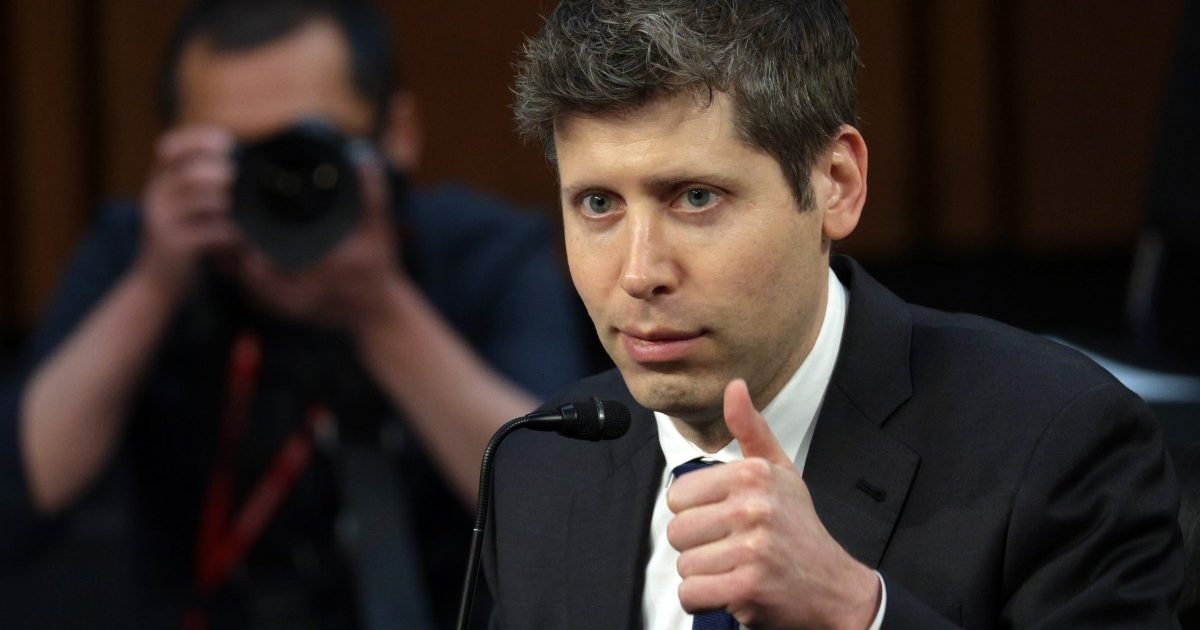
Available statements suggest the process has been more personal than institutional. OpenAI CEO Sam Altman has referenced conversations with senior officials such as Commerce Secretary Howard Lutnick and Treasury Secretary Scott Bessent, without disclosing which experts tested the models or what methodology they followed.
Conflicts of Interest and the Question of Independence
The picture is further complicated by reported ties between company leadership and the U.S. administration, making it difficult to separate technical considerations from political ones. By contrast, Anthropic's "Fable" model had a more contentious experience with the administration — manifested in the restriction of foreign access — which some attribute to personal tensions between the company and the administration in addition to genuine security concerns.
What's the Alternative? Toward a Sustainable Oversight Model
Konwinski argues that the solution lies in establishing an "open commons" bringing together researchers, government officials, and private companies, modeled on successful institutions such as the FDA, NIH, and national laboratories — enabling genuine consensus on safety issues, free from commercial pressures.
He warns that capitalist pressures — which push companies to recoup enormous training costs as quickly as possible after launch — represent a structural constraint on safety decisions, even when intentions are good. Ball, for his part, believes the future depends on independent government-licensed auditing organizations that can evaluate frontier labs with objectivity and rigor.
- The absence of unified, transparent standards for evaluating frontier models before release.
- Excessive reliance on personal relationships rather than established regulatory institutions.
- The exclusion of technical experts specializing in safety and alignment from the decision-making process.
- A potential conflict between companies' legal obligations and public safety requirements.
In sum, the question is not only whether these models are safe, but who has the right to make that determination, by what standards, and with what degree of transparency. These questions remain without adequate answers in a regulatory landscape that has yet to take shape.
✦ بقلم فريق دروب أيديا
DROPIDEA
We hope this article has added real value to you. At DROPIDEA, we always strive to deliver high-quality content that helps you grow and evolve in the digital space. Follow us for more useful articles and guides.
Tags
Admin
DROPIDEA
Latest Articles
Nscale Acquires Anyscale for $1.65 Billion to Expand Its Dominance in AI Infrastructure
How Is AI Accelerating Meta's New App Launches?
Okta Acquires Security Firm Permiso for Around $200 Million
Microsoft Gains $3.2 Billion from Its Investment in Anthropic