How Google's SynthID System Exposed an AI-Generated Fake Image
 By Admin
When Technology Succeeds Against Misinformation
In a world where image manipulation and digital content tampering are escalating at an alarming rate, a real-world test has proven that tools designed to combat generative AI are more than just theoretical promises. This week, Google's SynthID system demonstrated its ability to detect a widely circulated fake image — marking a turning point in the battle for digital trust.
The Fake Image and Its Rapid Spread
Users on Reddit and X shared an image purportedly showing U.S. Senator Mitch McConnell hospitalized, surrounded by medical tubes in a critical condition. The image spread rapidly amid mounting speculation about the Senator's health following his emergency hospitalization on June 14th and his near-complete absence from the public eye.
However, fact-checking website Snopes moved quickly to debunk the image, citing a precise finding: the image carries a hidden SynthID watermark — the invisible signature developed by Google to identify AI-generated images.
What Is SynthID and How Does It Work?
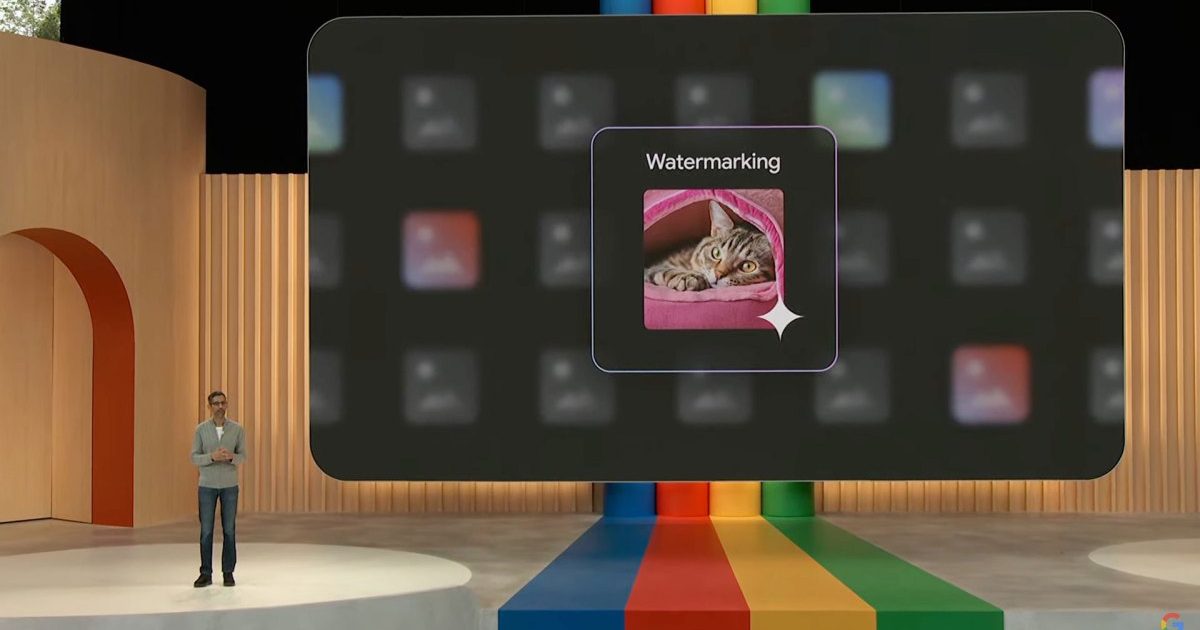
Google launched the SynthID system at its Google I/O developer conference in 2025. The concept is based on embedding an invisible digital signature directly into the structure of an image at the moment of generation. This watermark:
- Cannot be detected by the naked eye or by the average user.
- Remains intact even after screenshots are taken and the image is shared across multiple platforms.
- Can only be detected by SynthID's dedicated algorithms.
This is precisely what made the system effective in the McConnell case. Despite the image being circulated across various platforms and reshared multiple times, the watermark remained intact and detectable.
Who Is Participating in the Program?
The success of SynthID depends on image-generation companies integrating the watermark into their outputs. To date, the list of participants includes:
- Google: Has embedded the watermark in its Gemini models since the program's launch in 2025.
- OpenAI: Joined the program in May 2026 as part of its efforts to combat harmful image generation.
Meanwhile, Anthropic remains outside this ecosystem for now, suggesting that universal coverage is still a distant goal.
How Can You Verify Images?
Checking for a SynthID watermark has become accessible to everyone through two main avenues:
- Asking a Gemini model directly.
- Uploading the image to the public verification tool provided by OpenAI.
The System's Limitations and Future Challenges
Despite this achievement, there are fundamental limitations that must be considered. The system cannot detect images generated by tools that do not participate in the program, and the absence of major companies from the participant list leaves gaps that malicious actors can exploit. As such, SynthID remains a partial solution — though a promising step — in the face of a growing wave of digital forgery.
What the McConnell case revealed is that the technology works when there is a shared will to make it work. The real challenge now is not developing the tools themselves, but expanding their adoption and building a culture of digital verification among everyday users.
✦ بقلم فريق دروب أيديا
DROPIDEA
We hope this article has added real value to you. At DROPIDEA, we always strive to deliver high-quality content that helps you grow and evolve in the digital space. Follow us for more useful articles and guides.
Tags
Admin
DROPIDEA
Latest Articles

Pangram Raises $9 Million to Detect AI-Generated Content

Encore AI تجمع 30 مليون دولار لبناء وكلاء ذكاء اصطناعي يتعلمون من مكالمات العملاء

Hint: The AI-Powered Home Management Assistant with Martha Stewart's Touch
Startup Runlayer Accuses Rippling of Stealing Its MCP Product Idea