Do you want to create a free WordPress website? In this article, we will learn about the steps to create an integrated WordPress website that expresses your identity and attracts audiences with ease.
Why should you use WordPress?
– Requirements for creating a free WordPress website Steps to creating a free WordPress website 1- Purchasing hosting Why is it not a good idea to use free hosting?
2- Buy a domain name
Why is a free domain name not good? 3- Installing WordPress on the hosting 4- Installing the website template and necessary plugins 5- Customizing the website (template) Tips for obtaining a successful WordPress website - Yes, can we help you?
Frequently Asked Questions Why should you use WordPress? Using WordPress effectively enhances the website management experience, because it has an easy-to-use interface that makes creating and customizing websites easy, quickly, and without the need for advanced programming skills. It allows users to easily edit content through a web-based text editor, thanks to its simplified yet advanced functionality.
In addition, WordPress offers a wide range of plugins and themes that enhance site performance and enable it to be flexibly customized. Which contributes to improving the user experience and attracting more visitors. WordPress is also a friendly content management system for effective SEO optimization, which contributes to increasing the visibility of the site on search engines.
And improve its rating. In the end, WordPress is a reliable and effective option for website owners who want to create and manage their sites in a simplified yet advanced way. Requirements for creating a free WordPress website Creating a free WordPress website requires choosing a unique and appropriate domain, reliable hosting to store the website on the Internet, in addition to choosing a template that suits your content, and is characterized by responsiveness and ease of use.
Steps to create a free WordPress website: Choose a suitable domain and free or paid website hosting, then install the WordPress platform, choose a free template that matches the content of your website, and add the basic content to launch your website. These are the basic steps so you can create a free WordPress website. Here are the steps to creating a free WordPress website in detail from A to Z. 1- Purchase hosting
To be able to purchase hosting
Go to the hosting services provider’s website (such as Bluehost or SiteGround), choose a hosting plan that suits your needs and click “Purchase”, then register the domain you chose and fill in the personal account information and invoice details, and finally, complete the purchase process via electronic payment to obtain your hosting package. Why is it not a good idea to use free hosting? Using free hosting for a WordPress website can cause challenges, as space and performance speed may be limited, it may impose unwanted ads, which affects the professionalism of the site, and it may lack customization options and effective technical support, which makes paid hosting a better option to ensure stable performance and an effective user experience.
2- Purchase a domain name. In order to be able to follow the steps to create a free WordPress website, you must purchase a domain name. Start by visiting one of the websites that provide domain services, such as Namecheap or GoDaddy. Then search for the desired name and choose the purchase option.
Add the domain to your cart and follow the steps to complete your purchase, where you will need to provide personal information and select a subscription period. Next, choose payment options and complete the process to become the domain owner.
Why is a free domain name not good?
A free domain name may not be good for several reasons: First, the domain name may appear as part of the free hosting providers' domain, making it less professional. Secondly, advertisements may be attached to the free domain, which negatively affects the appearance of the site and clutters the user experience. Third, a free domain name does not always reflect the unique and professional identity that a website might need.
Finally, there may be limitations in domain name customization and control options compared to paid domains, hindering your ability to achieve a unique vision for your site. 3- Install WordPress on hosting. After choosing the appropriate domain and hosting, you must start the process
Install WordPress on your hosting so you can create a free WordPress website. You can perform this step very easily by following the following steps: First you need to go to the control panel of the hosting service provider’s website from which your hosting was purchased, and in my case I will go to the Bluehost website through the link here
And start entering the most famous site in the world of hosting. After entering the site, log in by clicking on the “log in” option as shown in the image below. Please enter your login information, including your username and password, then click “Log in.”
Alternatively, you can easily log in using your Google account. Once you log in, you will find yourself in your control panel on the Bluehost hosting platform.
From there, go to the “My Sites” section so you can easily manage your personal websites on Bluehost. When you log in, you will be presented with a new page that paves the way to begin the process of creating a WordPress website. First, you are asked to add your website name in the designated box.
Once you enter a unique name for your site, click “Continue” to complete the remaining steps easily and conveniently. Now, it's time to connect the domain to hosting to complete the WordPress installation process. You can do this easily by adding the chosen domain name in the designated field, as shown in the attached image.
After verifying the availability of the domain and linking it to your account, click “Continue” to move to the next steps quickly and easily. In this context, wait a few moments until the installation process is completely completed. When it is completed, the phrase “Installing WordPress” will automatically be cleared, as shown in the image, announcing the complete success of the process.
Congratulations! Now, thanks to your new skills at manually installing WordPress in just five minutes, you have access to your own WordPress dashboard. Simply click on the three dots available next to “Installing,” and then press “Login” for immediate access.
Enjoy full control over your site and experience easy and efficient management. You will receive a confirmation message that WordPress has been installed successfully, but there are some settings that we are currently working on, and it may take a few hours to fully complete, so that the site is ready for use. This includes adjusting the site URL and configuring DNS, as well as adding the free Cloudflare Firewall, which enhances the site's security.
Don't worry, you can easily complete your WordPress site's dashboard by clicking “Login To WordPress” to log in to your account. You will be able to manage your entire site, install plugins and themes, without having to interfere with these complex settings. Enjoy the experience of managing your site easily and effectively.
At this time, WordPress has been successfully installed and you can easily start using it. You can access WordPress via the Bluehost control panel or using the login credentials set during the setup process. As the image shows, you can now start exploring and using WordPress
With ease. 4- Install the website template and necessary plugins. There is a wide range of useful and necessary plugins designated for WordPress sites, and the selection of plugins depends on the type and purpose of the site. However, the following are some basic plugins that may be of benefit to many WordPress sites: 1- Yoast SEO plugin: Provides precise guidance for improving SEO for content pages and blogs.
It provides a comprehensive analysis of each page, assessing the quality of SEO and providing recommendations for improving it. It makes it easier to set up key site metadata, such as title, description, and keywords. Enables the assignment of Open Graph identifiers to improve the visibility of content on social media.
2- Akismet add-on: Akismet add-on is an effective shield to protect your site from unwanted comments and spam messages using spam detection technology. It automatically filters and blocks unwanted comments, which contributes to providing a clean and tidy environment for visitor interactions. It provides a comprehensive dashboard that enables you to easily check and manage suspicious comments, saving time and improving your content moderation experience.
3- Addition of W3 Total Cache: It enhances your site’s performance by accelerating loading time by caching pages, images, and dynamic content. Provides file compression techniques and leverages the Content Delivery Network (CDN) to deliver content effectively.
It contributes to improving user experience and improving search engine rankings thanks to faster page loading. 4- Addition of Contact Form 7: It provides an easy-to-use interface for creating custom contact forms without the need for advanced programming skills. Enables you to customize form fields and have full control over their arrangement and design according to your site's unique needs.
It supports managing multiple forms using shortcodes, which makes embedding forms on site pages easy and efficient. Allows you to easily configure your email settings to ensure that messages sent from forms are received without problems.
5- Add Jetpack:
Jetpack provides detailed statistics about your site's performance and visitor engagement, enabling you to analyze the data and improve content strategies. It ensures strong protection for your site through features such as protection from attacks, phishing, and an automatic backup system, which greatly increases the security of your site. Jetpack also makes it easy to share content across social media and boost reader engagement by effectively displaying relevant articles.
It provides performance acceleration via the Content Distribution Network (CDN), and takes advantage of caching techniques to enhance the loading speed of website pages. Please keep in mind that this is an overview of some popular plugins, and there are others available that meet specific needs for your site. You can explore more plugins in the WordPress plugin store.
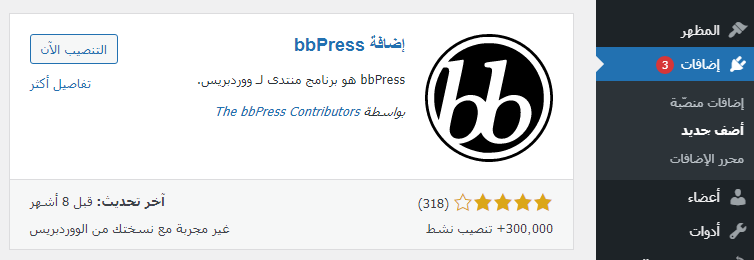
However, let's take a look at how to install one of the previous plugins as follows: First, log in to the WordPress control panel dedicated to your site. From the side menu, go to “Add-ons” and then choose “Add New”.
When you go to the “Add add-ons” page, it allows you to search for the add-on you want to install by entering its name in the search field. After accessing the required plugin, click on the “Install Now” button, where WordPress will download and install the plugin automatically. After completing the installation process, the Install Now button will disappear and new options “Activate” and “Delete” will appear.
Click on the “Activate” button to activate the installed add-on. Once activated, you can go to the add-on's settings (if available) to configure and customize it according to your needs. Here are now the steps to install the website template: WordPress is accompanied by a basic template
The default is called “Twenty Twenty,” however, there are several basic templates you can use. Over the next few lines, here are some prominent templates with their features: - Divi template: Powerful and comprehensive with an easy-to-use drag-and-drop interface and complete customization. Powerful visual building system and extensive customization capabilities.
Avada Template: Popular and known for its 40+ ready-made designs and 255+ customizable elements. It features advanced design tools and integration with popular plugins. – BeTheme: Versatile with 500+ ready-made designs, powerful customization, and flexibility.
Versatile with a comprehensive customization interface and diverse design options. It offers an advanced visual building system and strong integration with WooCommerce. – Newspaper template: specializes in news websites and electronic magazines with an attractive design and flexibility in customization.
It offers many ready-made templates and integrated components. After choosing the appropriate template, you can install it by following these steps: Download the template file from the developer's website. Log in to your WordPress dashboard and go to “Appearance” then “Templates”.
Choose “Add a new template” and upload the template file. After downloading, click “Activate” to activate the template. Then begin the process of customizing the template according to your needs.
5- Customize the website (template) If you are looking to customize your website via WordPress, you can follow us in the following steps to use the plugin known as “Mentor”. But he stresses the importance of taking a backup of your files before making any changes to the template, to ensure that you do not lose any accidental modifications that may occur. Additionally, it is recommended that you look to the official theme documentation or hire an experienced web developer if you need assistance with the WordPress customization process.
You can also use the “UpdraftPlus” add-on to perform the backup process easily and for free. Install the plugin via the WordPress website by going to the control panel dedicated to managing your website, and then you must activate it, customize the settings, and start the backup process. In conclusion, you can now start installing and activating Mentor on WordPress, and begin the process of customizing the theme according to your needs.
As shown in the picture below. Creating a new page starts with simple steps in the WordPress dashboard. Start by giving the page any name that suits you. Go to the side menu in the control panel, click on the “Get Started” option, then choose “Create a new page.”
Start customizing your new WordPress page using Mentor, as it provides many options for creating a unique design that suits your site’s needs. Click “Edit with Mentor” at the top of the page after creating the page, then take advantage of a wide range of elements and templates to customize the content. Use different elements such as “title”, “image” and “button” to build your page effectively.
Modify element properties and customize layouts and colors to fine-tune the design. You can also divide the page into columns and add global elements to unify the design across your site's pages. Don't forget to keep a backup of your files before making any major edits.
Once you have finished customizing the page and setting the template style, click “Update” to save the changes and make them active on your site. These are the main steps to complete the template customization process using Mentor. Please note that the Mentor interface may vary slightly between versions, but the general concepts and ideas remain similar.
Tips for getting a successful WordPress website: You must pay attention to the quality of the content on your WordPress website. Write effective content that meets your audience's needs and provides added value. Use important keywords to improve your search engine rankings and increase traffic.
Choose plugins carefully to custom enhance your site's functionality. Make sure your plugins are compatible with your current WordPress version and meet your project's needs.
Avoid installing unnecessary add-ons to improve site performance and speed. Improving loading speed contributes to improving user experience and improving search engine rankings. Reduce the size of images and use caching techniques to speed up pages.
Constantly test your site's performance and look for opportunities to improve speed. Update WordPress, themes, and plugins regularly to ensure you have the latest features and security improvements. Back up the website periodically to avoid data loss in case of any problems or attacks.
Do you want to make your way easier and get a wonderful website with amazing features and the latest modern technologies that take into account Google’s requirements and make it a successful website that competes with the largest and most famous sites???? All you have to do is write to us so that we can shorten the path that we previously explained and save you fatigue and loss of time without a result that satisfies you... - Yes, we can help you? We at Web Winner provide integrated services that help you create a profitable blog, by: helping you choose.
Correct study. Blog design and creation. Technical support.
Contact us In conclusion, it can be said that creating a free WordPress website is an ideal option for those who want to launch their project online quickly and efficiently. Thanks to the ease of use of WordPress and the availability of many free templates and plugins, anyone can create a professional and attractive website without the need for advanced programming skills. In addition, WordPress offers many features that make site management easy and organized.
Frequently Asked Questions Is creating a WordPress website completely free? Yes, it is possible to create a completely free WordPress website using the free hosting services on WordPress.com. This allows you to get your site started quickly without hosting fees or additional costs, but you should be aware of the limitations of the free service, such as built-in ads and limited options for customization.
You can develop the site later by moving it to paid hosting to enjoy more flexibility and control over your website. How can I create a free WordPress website? To create a professional free WordPress website, start by visiting WordPress.com and click “Get Started.”
Enter your account information and choose “Start with a free site,” then select the site type and domain name, or choose a free combination. Choose a professional theme and start adding content using WordPress' easy-to-use interface.
Can I get a free domain with a free WordPress website?
Yes, you can get a free domain with a free WordPress website through WordPress.com. When you create a free WordPress account, you'll get a free domain name that includes a subdomain on the wordpress.com domain. However, if you want to have your own domain (such as example.com), you can purchase a paid domain and link it to your WordPress site to add a professional, unique feel to your site's title.
Are there any storage space or domain limitations in free hosting? Yes, free hosting services often have limitations on storage space and domain size, which may affect your ability to store files and handle the volume of traffic to your website. It's best to evaluate your site's needs and consider paid hosting if you need a lot of storage space or expect a high volume of traffic to your site.
Can I remove built-in ads on a free WordPress site? Yes, you can remove native ads on your free WordPress site through WordPress.com by upgrading to a paid plan. In general, paid plans offer additional features, including the ability to remove ads and make your site appear more professional.
You can choose the plan that meets your needs and fits your budget, and then set your site freely from native ads. ****************************
DROPIDEA
We hope this article has added real value to you. At DROPIDEA, we always strive to deliver high-quality content that helps you grow and evolve in the digital space. Follow us for more useful articles and guides.

Admin
DROPIDEA
Latest Articles

Nscale Acquires Anyscale for $1.65 Billion to Expand Its Dominance in AI Infrastructure

How Is AI Accelerating Meta's New App Launches?

Okta Acquires Security Firm Permiso for Around $200 Million

Microsoft Gains $3.2 Billion from Its Investment in Anthropic