NASA Launches Emergency Mission to Save Swift Observatory from Reentry
 By Admin
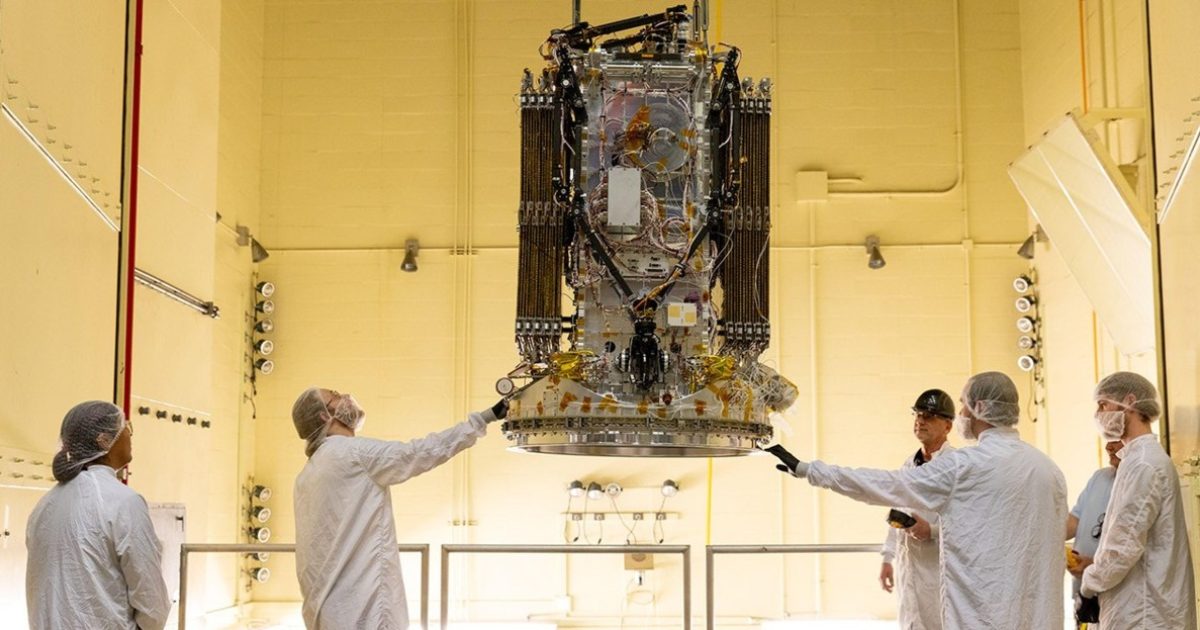
An Observatory on the Edge of Destruction
The Neil Gehrels Swift Observatory was launched in 2004 as one of the most prominent scientific instruments ever deployed for detecting gamma-ray bursts — those violent cosmic phenomena that reveal the universe's secrets from its earliest epochs. Yet this invaluable observatory, which cost nearly half a billion dollars to build, now faces its fate. Recent solar storms have been pushing it toward the denser layers of Earth's atmosphere at an accelerating rate, raising the alarm of an imminent catastrophe.
How Did It Come to This?
The observatory is currently orbiting at approximately 360 kilometers above Earth's surface — far lower than its original orbit. The cause is intensifying solar activity, which causes the upper atmosphere to expand, increasing the drag forces on low-orbit satellites and gradually slowing them down. The core problem is that Swift has no propulsion system whatsoever; it carries no thrusters capable of returning it to a safe altitude.
NASA estimated that without immediate action, the observatory would reenter the atmosphere and burn up in a process that could begin as early as the end of this year.
The Solution: A Three-Armed Spacecraft
Faced with this threat, the American space agency turned to Catalyst Space Technologies, a company specializing in on-orbit servicing solutions. The company launched its vehicle, named Link, last Friday on an unprecedented mission: to intercept Swift, dock with it, and boost it to a higher orbit. The spacecraft relies on three mechanical arms to grab and stabilize the observatory, then generate the thrust needed to raise its orbit by approximately 240 kilometers.
A Race Against Time and an Extraordinary Logistical Challenge
What makes this mission even more remarkable is not only its technical complexity, but the record speed with which it was accomplished. NASA informed the company that next October would be the final, irreversible deadline — after which the observatory would descend to an altitude from which rescue would be impossible. Catalyst responded by designing, building, and launching the spacecraft in just nine months, at a cost of $30 million — a striking achievement by the standards of a space industry accustomed to development cycles spanning years.
Scientific Value Worth Saving
Swift is far more than an aging piece of hardware; it is a scientific platform still delivering real contributions. Specializing in detecting gamma-ray bursts — the most powerful known explosions in the universe — its data over two decades has contributed to:
- Understanding the early stages of the universe's age and evolution.
- Studying neutron star mergers and the gravitational waves they produce.
- Providing rapid alerts to observatories worldwide when rare cosmic events are detected.
This approach reflects a growing trend toward what is known as "space servicing" — extending the operational life of functional satellites rather than replacing them at enormous cost. Should the Link spacecraft succeed in its mission, it will set an important precedent, proving the viability of this model and its capacity to save space assets that cannot easily be replaced.
✦ بقلم فريق دروب أيديا
DROPIDEA
We hope this article has added real value to you. At DROPIDEA, we always strive to deliver high-quality content that helps you grow and evolve in the digital space. Follow us for more useful articles and guides.
Tags
Admin
DROPIDEA
Latest Articles

Pangram Raises $9 Million to Detect AI-Generated Content

Encore AI تجمع 30 مليون دولار لبناء وكلاء ذكاء اصطناعي يتعلمون من مكالمات العملاء

Hint: The AI-Powered Home Management Assistant with Martha Stewart's Touch

Startup Runlayer Accuses Rippling of Stealing Its MCP Product Idea