OpenAI Shuts Down Atlas Browser and Redistributes Its Capabilities to Chrome and Its App
 By Admin
The End of Atlas… But Not the End of the Idea
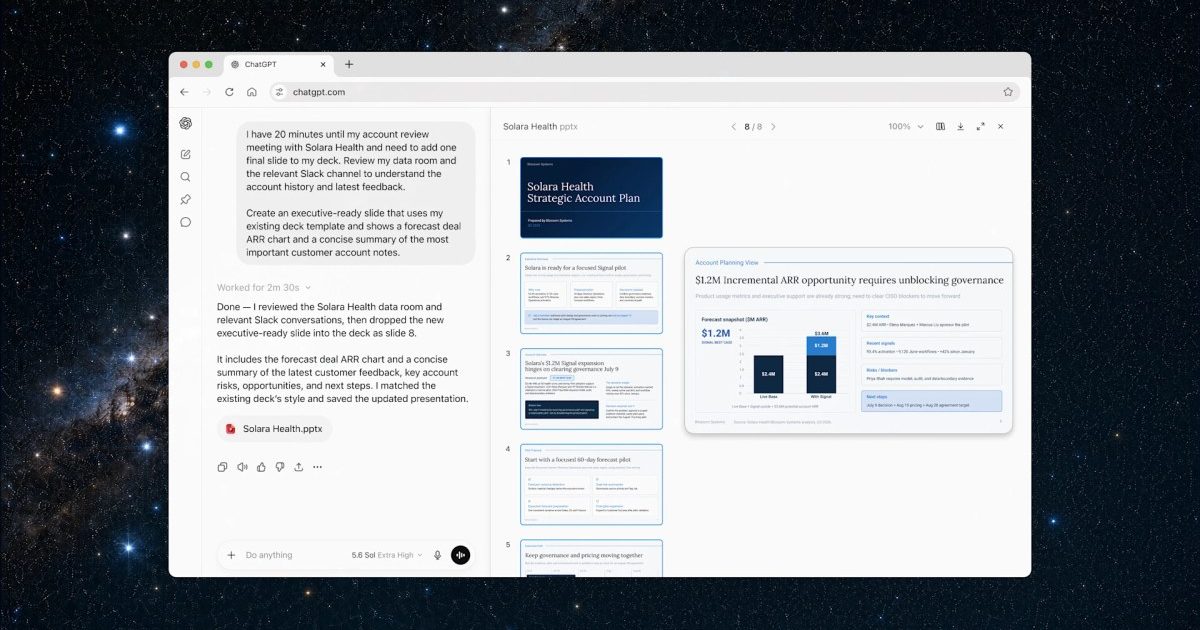
OpenAI has decided to shut down its AI browser "Atlas," which it had launched last October with integrated ChatGPT technology. However, this decision doesn't signal a retreat from the company's AI ambitions in the web browsing space — rather, it reflects a strategic rethink of how that intelligence should reach users. Instead of a standalone browser, the company has chosen to embed the smart features tested in Atlas into two environments used by millions daily: the ChatGPT desktop app and a new Google Chrome extension.
A Decision in the Context of Restructuring
The shutdown of Atlas came in the wake of directives issued by Fidji Simo, OpenAI's former Chief Product Officer, urging teams to focus on core priorities and step back from what she described as "secondary tasks." In the same vein, the company also discontinued the "Sora" video generation tool, which had previously attracted widespread attention. It appears that OpenAI is entering a phase of greater discipline in its product choices.
The Race for AI-Powered Browsers
Over the past year, the AI sector has seen fierce competition over the future of web browsing. Perplexity launched its "Comet" browser, The Browser Company unveiled "Dia," and both Google and Microsoft updated Chrome and Edge with a suite of AI-powered features. Against this backdrop, OpenAI reached a pivotal conclusion: a smart browser is a feature, not a standalone destination — and that insight drove its new strategic shift.
The Chrome Extension: A Direct Rival to Google Gemini
OpenAI is launching a ChatGPT extension for Chrome that gives users the ability to interact with the content of web pages they're browsing in real time. The extension's capabilities include:
- Asking questions about the content of any web page
- Quickly summarizing articles and reports
- Running longer, more complex tasks directly from within the browser
The extension is a clear competitor to Google's "Gemini side panel" available to Chrome users, adding a new competitive dimension between the two tech giants.
The Desktop App: A Comprehensive Work Environment
On a parallel front, OpenAI is infusing deeper browsing capabilities into the ChatGPT desktop app, enabling users to:
- Browse websites without leaving the app interface
- Log in to various accounts
- Download files and interact with page elements
- Use a cloud-based browser running on OpenAI's servers to carry out agentic tasks on the user's behalf
The Full Picture: ChatGPT as a Work Environment, Not Just a Tool
Taken together, these updates mark a transformation of ChatGPT from a simple chat window into a continuous work environment spanning the Chrome extension, the desktop app, and a cloud-based AI agent. The real bet here is clear: be present where users already spend their time, rather than drawing them toward an entirely new destination. It's a strategy that feels more mature and far more aligned with users' everyday habits.
✦ بقلم فريق دروب أيديا
DROPIDEA
We hope this article has added real value to you. At DROPIDEA, we always strive to deliver high-quality content that helps you grow and evolve in the digital space. Follow us for more useful articles and guides.
Tags
Admin
DROPIDEA
Latest Articles

Nscale Acquires Anyscale for $1.65 Billion to Expand Its Dominance in AI Infrastructure

How Is AI Accelerating Meta's New App Launches?

Okta Acquires Security Firm Permiso for Around $200 Million
Microsoft Gains $3.2 Billion from Its Investment in Anthropic