SEO and site language: Your guide to harnessing SEO tools to suit the language of your site
 By Admin

Many of the followers of the SEO blog in Arabic must own websites or blogs in the Arabic language, and some own websites or blogs in Arabic and English. As usual, everyone is trying to rank high in the search engine results, and everyone is working on examples of their website that are appropriate to the factors of the search engines. But have you thought beforehand about how to use SEO tools and techniques that are appropriate for the language in which your website is written? Rather, are there additional procedures that must be taken into account if the website is written in a language other than the language? English? In this article, I provide you with a detailed explanation of the steps and techniques for SEO that you must take into consideration if your site is written in a language other than English. This article is about linking SEO techniques related to the language of the site in general and Arabic in particular. I ask God for success in making the ideas I want to present come across simply and smoothly. I wish everyone enjoyment and benefit.
Topic Contents Toggle the difference between special SEO techniques
In the language and SEO tools specific to the geographical location. Who is the target audience? The structure of the site link. Ranking within a specific geographical location, such as improving the ranking in search results in Google Egypt, or improving the ranking of my site compared to the ranking of sites targeting the Maghreb. In general, these two techniques overlap when applied, and we will not be able to separate them much, so we will discuss both techniques in this article. Who is the target audience? As usual in my articles, I always focus, above all, on determining the audience to be targeted, whether the goal is e-commerce or electronic advertising. Above all, define your audience. First, determine the geographical areas in which visitors to your sites are located. After that, determine the languages that the residents of these areas speak (thank God that all of our countries speak the Arabic language, and this makes it easier for us to work on websites).
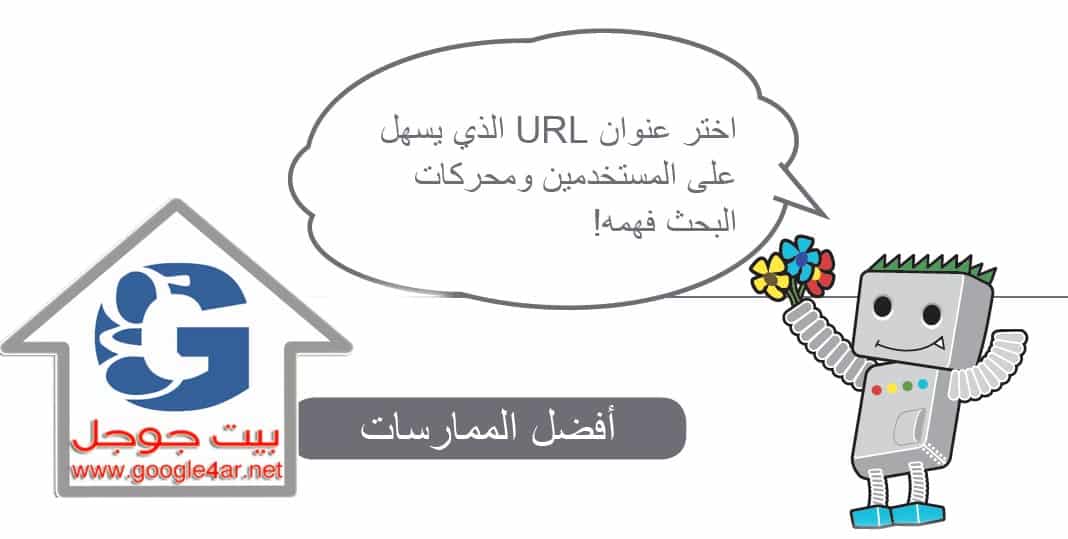
Website link structure (URL): One of the good techniques that can be used is to optimize the link to the website to suit the geographical region of the targeted customers. There are four basic methods in building a link that is compatible with the geographical location of visitors to your site. Here are these methods and the pros and cons of each of them: Putting the country code at the highest level of the link, or ccTLD for short: Example: www.example.eg, where “eg” is a code that symbolizes Egypt. Pros: 1- Clear targeting of the geographical area.
2- The hosting company’s geographical location becomes unimportant. 3- Ease of separating the copies of the site for each country, so that each copy can be placed on a different server. Cons: 1- The cost is high.
2- The domain you want may be reserved. Putting the country code in the partial domain: Example: eg.example.com Pros: 1- Easy setup. 2- Ease of separating the copies of websites for each country, so that each copy can be placed on a different server.
3- Less expensive. Cons: 1- Less efficient in terms of targeting than the previous method. Placing the country code in a special directory: Example: www.example.com/ar. Pros: 1- Ease of setup. 2- Ease of maintenance.
3- Low cost. Disadvantages: 1- All copies of the site must be placed on the same server. 2- Separating the copies of the site will become more difficult and there will be an interconnection between these copies.
Putting the country code in the link parameters: Example: www.example.com?loc=eg or www.example.com?country=syria This method is the worst method, as you cannot use ready-made tools for geographical targeting of visitors, it is difficult to apply, separating the copies of the site is impossible, all copies of the site will be placed on the same server, and it is not recommended by search engines. These are the most important methods for website addresses. Choose what suits the budget allocated to the website. One of the factors that you must take into account is the location of the server or the server, that is, the geographical location of the hosting company’s server and its proximity to the user. The geographical location of the server and the visitor is determined by their IP. After that, results that are closest to the visitor are suggested. In fact, the location of the server is not that great of a matter that should cause you concern currently. Today, most hosting companies currently provide CDN service. You can see more details about the CDN here. Use HTML tags There are some HTML tags that you must use in order to improve the ranking of your site. These tags are related to the language of the site and the geographical location of the site’s visitors. Let us follow together the most important of these tags: - hreflang: This tag is used on multilingual sites, assuming that the primary language of the site is English, and there is a link on the English page that takes you to the Arabic version of the site. Put in the tag
The following HTML tag: < link rel=”alternate” hreflang=”ar” href=” http://example.com/ar” /> - x-default: Assuming that you have built special pages for Arabic speakers from Egypt, pages for Arabic speakers from Syria, and pages for Arabic speakers from the rest of the Arab countries, in this case you will use the description x-default. Read the example below: < link rel=”alternate” href=”http://example.com/ar-eg” hreflang=”ar-eg” /> < link rel=”alternate” href=”http://example.com/ar-sy” hreflang=”ar-sy” /> < link rel=”alternate” href=”http://example.com/” hreflang=”x-default” /> The meta description is one of the important things and the basic factors in determining rankings for search engines. The meta description is the following. You can see the following full detailed article that shows you how to optimally use the meta description from here. However, if your site targets several languages and its pages are written in several languages, then the meta description must be put in the language of the page. Arabic pages must have their meta description in Arabic, and English pages must have their meta description in English, in this area as well. I advise you to use content-languag within the meta description to indicate the language of the page’s content, as in the following example: < meta http-equiv=”content-language” content=”en-us” > A final question at the end of this article. Perhaps the following question will come to your mind: If the site is in Arabic and there are two versions of it: a version designated for visitors from Syria, and a copy designated for visitors from Morocco, and there are many articles shared between the two versions and they are in Arabic, wouldn’t that be considered copying and duplication of content that could be punished by Google and its sister search engines? The answer is simple, as long as you use rel=”alternate” and “x-default”, which I explained in this article, do not worry, as this will not be considered copying or duplication. These are the most important points and techniques for SEO related to the difference in language and geographical location. I hope that I explained them in a simple, easy and not boring way and in a way that is beneficial to everyone.
#GoogleSEOtag #SEO
DROPIDEA
We hope this article has added real value to you. At DROPIDEA, we always strive to deliver high-quality content that helps you grow and evolve in the digital space. Follow us for more useful articles and guides.
Admin
DROPIDEA
Latest Articles

Nscale Acquires Anyscale for $1.65 Billion to Expand Its Dominance in AI Infrastructure

How Is AI Accelerating Meta's New App Launches?

Okta Acquires Security Firm Permiso for Around $200 Million

Microsoft Gains $3.2 Billion from Its Investment in Anthropic