Successive Resignations at the Helm of U.S. AI Standards Leadership
 By Admin
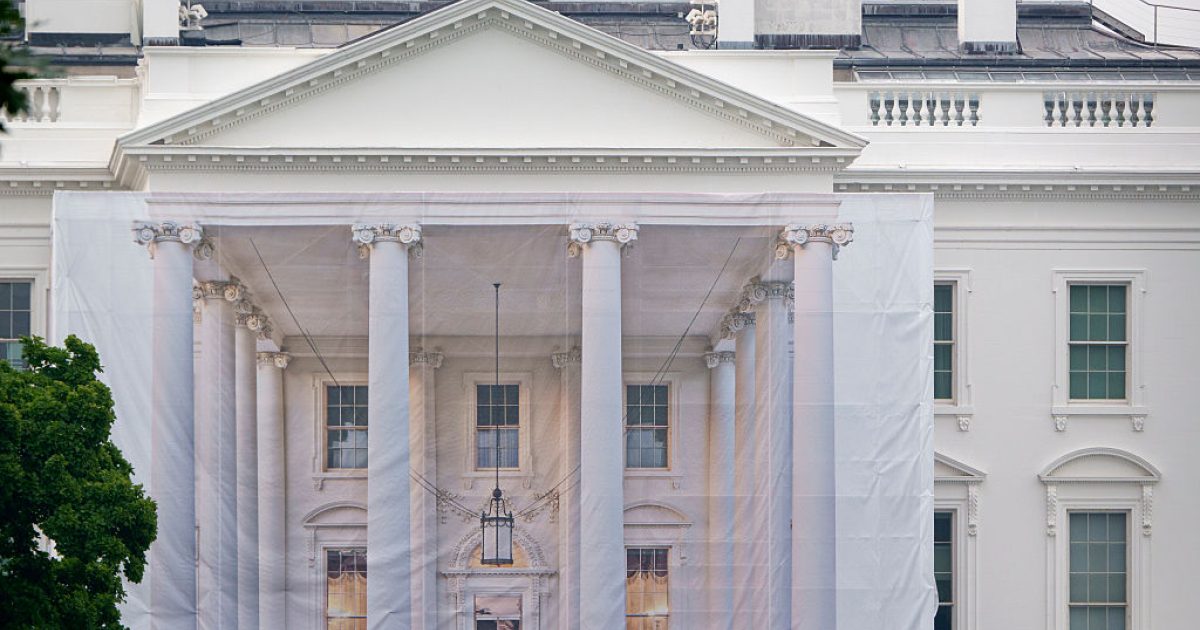
Leadership Instability at the AI Standards Center
American news agencies have reported the resignation of Chris Voll from his position as director of the Center for Artificial Intelligence Standards and Innovation (CAISI), part of the National Institute of Standards and Technology (NIST), after only about three months in the role. No official reason has been disclosed for his departure, adding further uncertainty to a center already suffering from repeated leadership disruption.
A Series of Abrupt Departures
Voll's resignation is not an isolated incident — it is the latest link in a chain of rapid leadership changes at this critical center. Before him, Colin Burns did not even complete his first week on the job; reports from The Washington Post indicated he was forcibly removed in April due to his prior association with Anthropic, at a time when the Trump administration was engaged in a dispute with that very company.
Before Burns, the center was overseen by venture capitalist David Sacks in his capacity as the White House advisor on AI and cryptocurrency, before he stepped down in March. CAISI has thus lost three leaders within a matter of months — a situation that undermines the institution's standing and calls into question its ability to fulfill its core mandate.
A Pivotal Center Facing Marginalization
CAISI's role encompasses developing technical standards, creating methodologies for testing AI models, and assessing cybersecurity risks. However, several indicators suggest its influence within the U.S. regulatory landscape is waning:
- When the White House issued the executive order for the Gold Eagle program on AI safety oversight, CAISI was notably absent from the list of participating federal agencies.
- On the international front, Google DeepMind CEO Demis Hassabis has begun advocating for the creation of an independent, industry-led standards body modeled after FINRA — which is precisely the core mandate for which CAISI was originally established.
- Since July 9th, TechCrunch has sent multiple inquiries to the Department of Commerce and NIST regarding large language model evaluation processes, without receiving any response to date.
Tensions with Anthropic and Their Fallout
These resignations coincided with a period of friction between the Trump administration and Anthropic. In June, the U.S. Department of Commerce invoked a vague export control directive that compelled the company to withdraw its Mythos and Fable models from the market. The ban was not lifted until the end of that same month, after Commerce Secretary Howard Lutnick declared himself satisfied with the safety plans the company had submitted.
Chinese AI Complicates the Picture
Voll's departure comes at a particularly sensitive moment, as a new version of the open-source Kimi model from Chinese lab Moonshot sparked widespread debate after demonstrating performance competitive with the world's leading frontier models. While the administration was weighing the possibility of banning Chinese open-source models, David Sacks himself pushed back against the idea, arguing that regulatory restrictions should not serve as a tool to shield American companies from competition.
Ultimately, this turbulent landscape reveals that the management of AI standards in the United States lacks the institutional stability it needs at a historically critical juncture — a moment when international technological competition is intensifying and security considerations are becoming ever more entangled with economic policy.
✦ بقلم فريق دروب أيديا
DROPIDEA
We hope this article has added real value to you. At DROPIDEA, we always strive to deliver high-quality content that helps you grow and evolve in the digital space. Follow us for more useful articles and guides.
Tags
Admin
DROPIDEA
Latest Articles
Nscale Acquires Anyscale for $1.65 Billion to Expand Its Dominance in AI Infrastructure
How Is AI Accelerating Meta's New App Launches?
Okta Acquires Security Firm Permiso for Around $200 Million
Microsoft Gains $3.2 Billion from Its Investment in Anthropic