The New York Times Accuses OpenAI of Concealing Evidence in Copyright Lawsuit
 By Admin
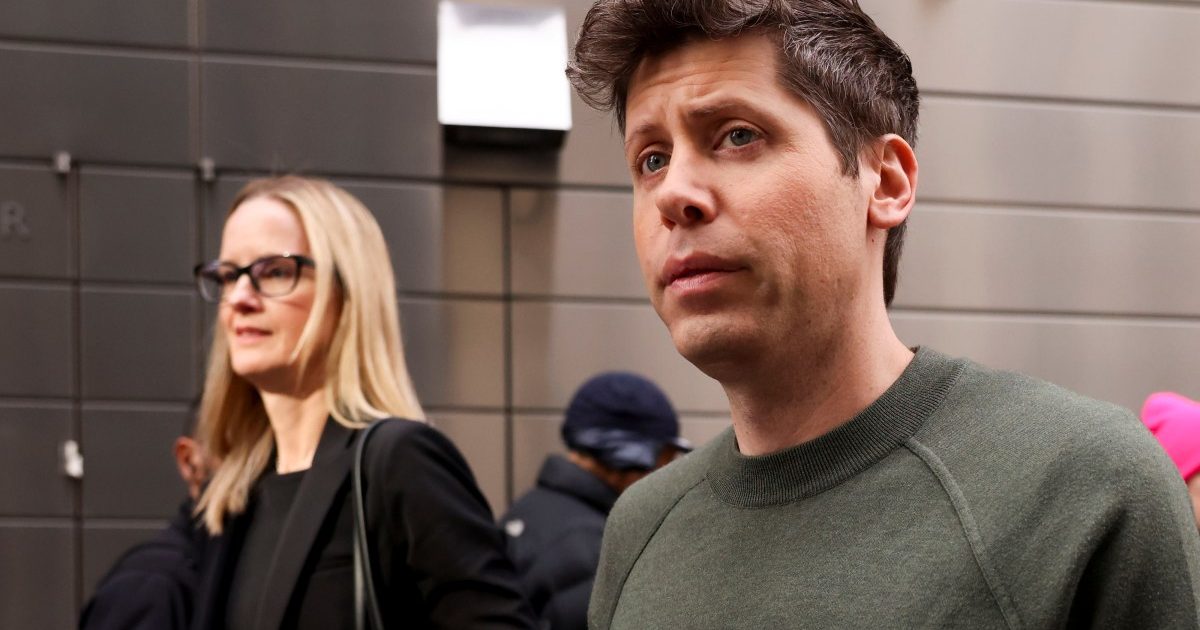
The Legal Confrontation Between Media and Artificial Intelligence Escalates
In a significant development in one of the most prominent AI-related legal cases, The New York Times and The Daily News have leveled serious accusations against OpenAI, alleging that the company deliberately misled the court about its actual technical capabilities to search within conversational data and training archives. These allegations arise in the context of a lawsuit that has been ongoing for nearly two years, centered on claims that the company used copyright-protected journalistic content without permission to train its generative AI models.
What Did the Deposition Witness Reveal?
During a court-ordered deposition conducted in April, OpenAI data privacy engineer Vinny Monaco provided testimony that surfaced surprising revelations. According to both newspapers, Monaco disclosed that the company had in fact conducted internal searches of its training dataset to check for the presence of copyright-protected journalistic works — something OpenAI had been denying in its official court filings.
The same testimony also revealed that, prior to the lawsuit being filed, OpenAI had begun building a database containing approximately 78 million anonymized ChatGPT conversations, which it was using internally to measure the extent to which it was infringing on others' rights. The company is also alleged to have developed a tool known as a "bloom filter" as part of a project called "Project Giraffe," designed specifically to detect and log instances of content reproduction in the model's outputs — and to have done so immediately after the lawsuit was filed.
Allegations of Evidence Tampering and Concealment
The accusations extend beyond mere passive withholding of information. The plaintiffs allege that OpenAI:
- Deleted billions of ChatGPT outputs after the lawsuit was filed, in direct violation of the court's evidence preservation order.
- Submitted a sample of 20 million conversation records so heavily redacted that the court itself described them as "unusable."
- Replaced millions of records requested in the submitted sample without disclosure.
- Initially refused to produce more than 20 million records out of the 120 million requested by the newspapers, citing technical difficulties and user privacy concerns.
In this context, lead counsel for the plaintiffs Ian Crosby commented: "If OpenAI truly believed that copying our clients' journalistic content was lawful and fair, it would not have gone to such lengths to conceal the truth about doing so."
What Are the Newspapers Seeking?
On the basis of these facts, the plaintiffs have asked the judge to impose a series of sanctions against OpenAI, most notably:
- Excluding the company's submitted record sample from the pool of admissible evidence, on grounds of unreliability.
- Directing that ChatGPT records would have demonstrated widespread infringement of the newspapers' content.
- Restricting the company's ability to argue the absence of evidence of infringement based on the withheld records.
- Ordering the company to cover attorneys' fees incurred in pursuing this evidence.
OpenAI's Response: Offense as Defense
OpenAI categorically denied these allegations, with spokesperson Drew Pusateri reframing the battle, arguing that the newspapers are seeking improper access to private conversations belonging to users who have no connection to the case. Pusateri stated: "As The Times's case weakens and it is forced to abandon some of its claims, the paper continues its efforts to intrude on the privacy of innocent individuals who have nothing to do with this dispute — through these plainly meritless accusations. We will continue to defend our users' privacy and the well-established principles of fair use."
The Case's Broader Significance and Implications
This case carries an importance that extends well beyond its immediate boundaries. It raises fundamental questions about the degree of transparency AI companies maintain regarding intellectual property, and about the limits of "fair use" in the age of generative models. It also sheds light on genuine risks facing creative content industries at a time when machines are being trained on human output without any clear consensus on the legal and ethical frameworks needed to govern that process.
✦ بقلم فريق دروب أيديا
DROPIDEA
We hope this article has added real value to you. At DROPIDEA, we always strive to deliver high-quality content that helps you grow and evolve in the digital space. Follow us for more useful articles and guides.
Tags
Admin
DROPIDEA
Latest Articles
Nscale Acquires Anyscale for $1.65 Billion to Expand Its Dominance in AI Infrastructure
How Is AI Accelerating Meta's New App Launches?
Okta Acquires Security Firm Permiso for Around $200 Million

Microsoft Gains $3.2 Billion from Its Investment in Anthropic