In this article, we will talk about one of the lighting methods called side lighting, its importance, and why filmmakers pay great attention to it in their works. What is side lighting - Side light Side lighting - Side light is a lighting technique in which light is shed from one side of the subject to be photographed.
Side lighting features - Side light almost
Side lighting is present in almost every cinematic scene, due to the nature of this lighting. It is closer to natural lighting for the human eye, and it also provides a simulation of the surrounding elements of the subject to be photographed. Another distinctive thing that many may not pay attention to is the use of this technique to simulate window lighting, torches, fires, and other elements that appear in the scene, such as the following very clear example from the Russian movie T-34: Notice how the lantern shown in the scene practically only lights itself, and they found it to be merely decorative, while the basic lighting that illuminates the faces of the actors is soft side lighting from the opposite side of the camera, so this lighting was used to illuminate the scene and to simulate the elements in the picture. Lighting is not random. Types of side lighting - Practically speaking, there is no approved classification for side lighting - but in this article, for simplicity, I will divide the lighting into two parts: Side lighting at the 9 o’clock axis and the 3 o’clock axis is a way to determine the directions in relation to an element. In our current talk about lighting, when I decided to divide the lighting into two parts, it was according to the effect that the lighting has on the element.
In this particular case, when the lighting is at a 3/9 angle, we notice that the lighting forms shadows on the face, dividing the face into two halves, half of which is illuminated and the other half is filled with shadows. This separation between light and shadow may help in telling the story. Side lighting at the 10 and 11 o'clock axes. In this case, when the lighting is at an angle between 10 and 11 o'clock, we notice that the lighting forms shadows on the face without dividing the face into two halves, as it illuminates one side of the face, and forms a light spot of light on the second part of the face, called Rembrandt's technique. What is Rembrandt's technique?
Rembrandt
It is a side lighting technique that has a specific mark, so that if it is applied correctly, a triangle will appear on one of the cheeks, consisting of the shadow of the nose. We previously talked about Rembrandt’s technique when we did a simplified analysis of cinematic lighting techniques in the series Alias Grace in the following article: Here we now have two types of side lighting according to the shadows and appearance it forms on the actor’s face: the lighting that divides the actor’s face in the middle between the lighting and the shadows, and the lighting that illuminates one of the sections of the actor’s face and forms the Rembrandt sign.
On the other end. Side lighting from the camera's point of view We talked above about side lighting from the actor's point of view, but what about the camera's point of view? What are the techniques used to obtain a scene lit in a cinematic way?
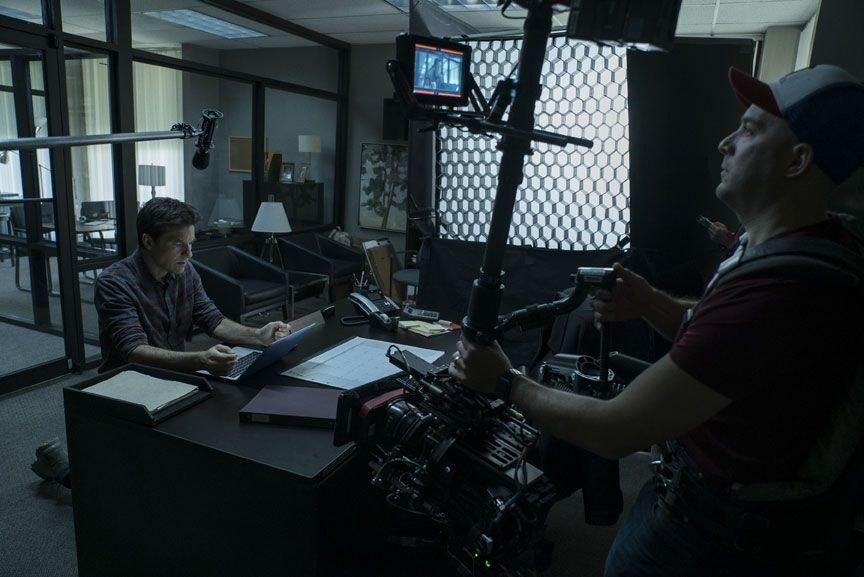
There are two types of lighting according to the location of the camera: - Distant lighting symbolizes that the lighting is on the opposite side of the camera. Do you remember the 180-degree rule in the camera angle? Imagine with me that the camera is on one side of that rule, and that the lighting is on the opposite side. This technique in distributing lighting is strongly adopted in films because of the contrast and contrast it creates. Notice the image below: Notice the actor’s face and the amount of contrast between him and the lit background. Notice the shadows formed on the near side of the camera. - Close lighting symbolizes that the lighting is on the same side as the camera. This lighting distribution technique is not used much, unlike its distant predecessor. This lighting creates a kind of natural and non-dramatic atmosphere. Of course, it can be used according to need and according to the scene, but in practice you rarely find lighting distributed in this way. General notes: Side lighting cannot be present arbitrarily and spontaneously. On the contrary, side lighting should simulate the light of a window, a fireplace, or a natural or artificial light source in the scene. Therefore, the lighting and photography director must use the lighting according to the data present on the site. Note the example below. We know very well that the light on the desk is not sufficient to physically illuminate the actor’s face, but its presence in the scene suggests to us that he is the source of light while there is light outside the frame that harms the entire actor. The harmony between practical lighting - practical (in this case the globe on the desk shown in the scene) and the lighting used to illuminate the actor is what constitutes the cinematic style and the correct formation of the lighting. Note that the lighting is not strong and its color is similar to the color of practical lighting
The same applies to windows, as lighting can be used by simulating window light, thus illuminating the scene without the need to justify the presence of lighting. Next time you want to distribute lighting in your scene, remember to use the natural elements in the scene. If there is a window, use it to justify the side light. If not, consider your use of practical lighting to justify the presence of lighting. Remember that the viewer is smart and will ask: What is lighting the actor? Here is a group of scenes that were illuminated by side lighting. Notice the scene, the location of the lighting, and the justification for the presence of that lighting: Here we have talked about side lighting and everything related to this technology in lighting. I would like to remind you that if you find any questions, you can send your inquiries through our accounts on social networking sites.
Facebook, Twitter, Instagram, or leave a comment below this article, and you can also subscribe
On the Telegram channel to receive exclusive content and follow our latest updates.
May you always be creative. Did you like the article?
Share it with your friends..
DROPIDEA
We hope this article has added real value to you. At DROPIDEA, we always strive to deliver high-quality content that helps you grow and evolve in the digital space. Follow us for more useful articles and guides.

Admin
DROPIDEA
Latest Articles
Nscale Acquires Anyscale for $1.65 Billion to Expand Its Dominance in AI Infrastructure

How Is AI Accelerating Meta's New App Launches?

Okta Acquires Security Firm Permiso for Around $200 Million

Microsoft Gains $3.2 Billion from Its Investment in Anthropic