When AI Becomes a Tool Without a Conscience: The Debate Over Freedom and Responsibility
 By Admin
A Question That Seems Simple... But Isn't
Imagine asking an AI system how to plan a murder, and it responds with complete calm and not a moment's hesitation. Is that really what we want from the technology we're building today? The answer might seem obvious at first glance, yet the debate unfolding within AI circles reveals that the issue runs far deeper than it appears.
The Spark Behind the Debate
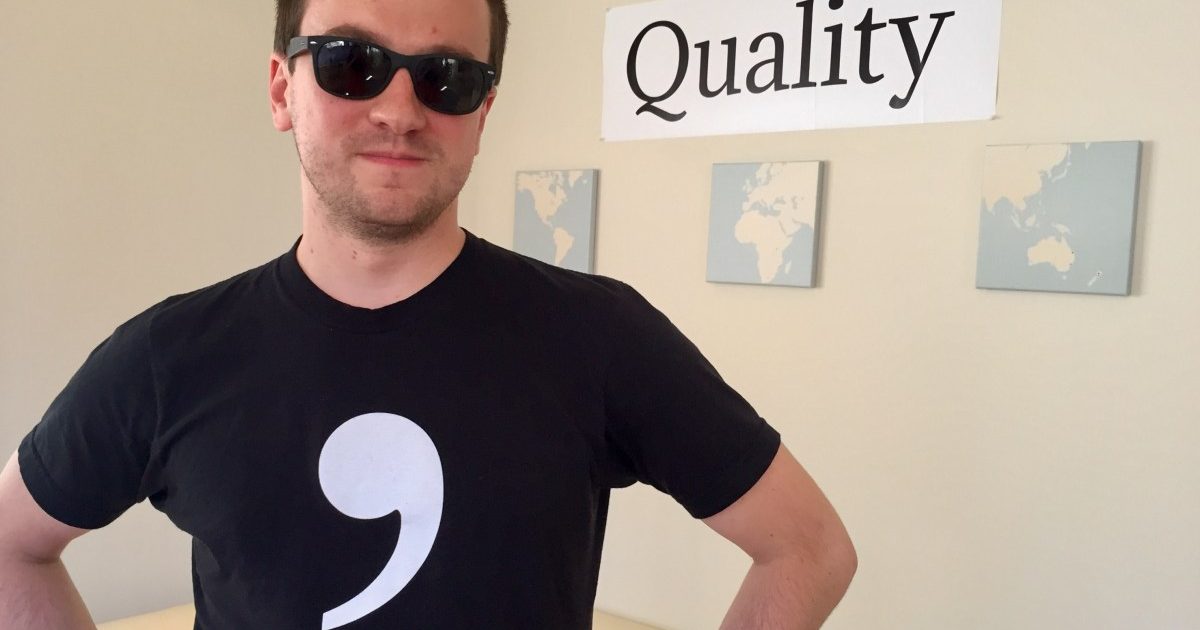
George Hotz, founder of Comma AI and a figure long known for his history of breaking through technical restrictions, ignited a wave of discussion when he published his views on AI alignment. This came in response to a policy paper released by the "AI Futures Project" titled "AI 2040: Plan A," which proposes slowing AI development for fourteen years in order to safeguard humanity's interests.
Hotz rejects this approach entirely, arguing that the scenario positing a sudden emergence of superintelligent AI is overblown and lacks realism. More importantly, he advances a vision that stands in sharp contrast to the prevailing consensus.
One Idea Worth Considering... Another That Raises Alarm
There is an aspect of Hotz's argument that deserves serious reflection: the idea of local AI running directly on users' own devices, rather than relying entirely on centralized services controlled by large corporations like OpenAI and Anthropic. Current models depend on vast, expensive infrastructure that makes individual control extremely difficult — yet this equation could shift as technology advances and costs fall.
But Hotz doesn't stop there. He goes on to deploy deliberately provocative analogies to drive his point home, comparing user-aligned AI to a firearm that raises no objection to the purpose for which it is used. He further argues that "true" AI should comply with any request — including helping a user obtain dangerous materials or carry out potentially illegal acts — and that he is prepared to defend this principle at any cost.
Freedom Does Not Exist in a Vacuum
Hotz's argument contains one fundamentally valid point: freedom is an intrinsic value that deserves to be defended. The problem lies in reducing the entire issue to a binary of "either total freedom or no freedom at all" — an oversimplification that ignores a crucial truth.
Human societies have never been built on absolute individual freedom, but rather on a delicate balance between individual rights and collective responsibilities. AI systems that serve millions of users cannot be evaluated from the perspective of a single user alone; they must be assessed in terms of their impact on the social fabric as a whole.
- Technology is never neutral: Every tool embeds values within its design, whether or not its creators acknowledge this.
- Potential victims are always present: Any technical decision that affects people's safety cannot be reduced to a mere "personal choice."
- Individual freedom is conditioned on not harming others: This is a well-established philosophical principle that predates the age of AI by centuries.
Where Is the Line Drawn?
The truth is that the debate over AI restrictions is not a debate between those who support freedom and those who oppose it. It is a discussion about the nature of responsibility in a world where technical systems are becoming ever more deeply intertwined with everyday life. Companies developing AI models face genuine pressure from two directions: users demanding greater flexibility, and societies demanding stronger protections.
Placing safeguards on AI does not necessarily mean stifling creativity or curtailing legitimate freedom. It means recognizing that immense technological power demands a commensurate degree of responsibility. This is not so different from the professional constraints that societies already impose on pharmacists, engineers, and physicians — constraints that ultimately serve everyone's interests.
The Bottom Line
Hotz's argument, deliberately provocative as it is, touches on a legitimate question: how do we build AI that genuinely serves users without becoming a tool in the hands of corporations that monopolize decision-making and steer technology according to their own interests? That question deserves serious debate. But the answer is not to tear down every ethical guardrail — it is to rethink who sets those guardrails, why, and how.
✦ بقلم فريق دروب أيديا
DROPIDEA
We hope this article has added real value to you. At DROPIDEA, we always strive to deliver high-quality content that helps you grow and evolve in the digital space. Follow us for more useful articles and guides.
Tags
Admin
DROPIDEA
Latest Articles

Nscale Acquires Anyscale for $1.65 Billion to Expand Its Dominance in AI Infrastructure

How Is AI Accelerating Meta's New App Launches?

Okta Acquires Security Firm Permiso for Around $200 Million

Microsoft Gains $3.2 Billion from Its Investment in Anthropic