Explaining FTP for beginners, and how to use it to manage your site files
 By Admin
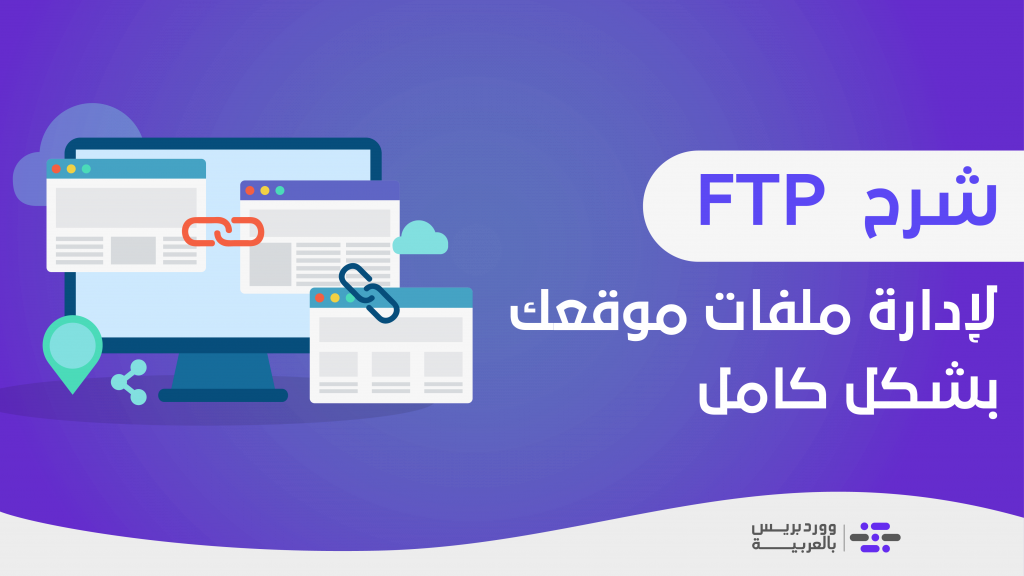
When you deal with your site's files, regardless of the content system you use (WordPress, Joomla, or other), you will inevitably need a system that helps you manage your site's files in order to download or upload files or even modify them, and this is what you can do using the FTP file transfer protocol. File Transfer Protocol (FTP) is used to communicate and transfer files between computers on the Internet, where users can transfer and upload files to and from your website. Therefore, through FTP, you can manage your website files with ease, as you can edit and modify files, create backup copies, and transfer files from your device to the server and vice versa. In this article, we will talk about explaining FTP and the programs used in it, as well as how to use it effectively to manage your site files.
Article Contents: What is FTP How does FTP work? Steps to use FTP What is File Transfer Protocol (FTP)? First of all, FTP is an abbreviation for File Transfer Protocol, which is a protocol that allows you to transfer files from one device or system to another, regardless of the operating systems used.
Through FTP, you can connect to WordPress files and folders, thus enabling you to make changes to your files, including deletion, modification, and repair. You may not need to use FTP, as you can access everything you want, upload files, modify them, or upload a template or other through the WordPress control panel, or through the hosting control panel (cPanel). But in any case, you will need to use FTP to facilitate the communication process, especially when the size of your site’s database increases, and in some other cases.
Through FTP, you can do several things, including: Troubleshoot WordPress problems Deactivate templates and plugins if you cannot access the WordPress control panel Transfer your website to another hosting account, as we explained in detail You can install templates or install plugins instead of installing them from the control panel in the known way Customize and modify your website files, as well as databases Download and install WordPress, and upload multiple large files or folders. Backing up your site, as we explained in detail. How does FTP work? The FTP protocol is based on exchanging files over the Internet, through two main parts: the FTP client, called the program (FTP client), which you rely on to transfer files FTP server, called the FTP server, where it stores your files and manages it. Thus, the FTP client is used to download files from the FTP server, and we also use the FTP client to upload files or save them on the FTP server.
In order to begin the file transfer process, you must install an FTP program on your computer. This program allows you to connect to the FTP server and download and upload files to and from the server, as well as upload, modify and transfer files, and fully manage your site files through your FTP account username and password. How do you use FTP? If you decide to use FTP to manage your site, you can create a connection through FTP in three ways: Through the FTP command line, by using (Command prompt), in Windows, Mac, or Linux, which is a method that requires some technical experience. Using the browser to connect to the FTP server, through a direct communication process between your computer browser and the server. Using the FTP client, or as it is called the FTP client, where you install the program on your computer and use it easily. The most common and easiest method is to use the FTP client, which will be explained. In the rest of the article.
FTP client There are many options available for you to choose the appropriate FTP client. You install the client (program) on your computer and then use it to access your site files. The most popular FTP clients are: FileZilla, the most popular, and works on Mac, Windows, and Linux systems WINSCP, which was designed specifically for Windows users and supports FTP, SFTP, and SSH Cyberduck, a free client and works with Mac and Windows Transmit, works with MAC devices User name and password When you run an FTP client, you will need the user name and password to host your site so that you can register them and be able to access your site files, and you can obtain the user name and password through the provider Your web or through the cPanel control panel. Note: This information is sensitive and no one can access it except the hosting owner (site manager), through the hosting control panel, and of course do not share it with anyone.
You can also create data and a new FTP account for some other users of the site administrators, through the cPanel control panel, where you have to go to FTP Account and a new window will open for you in which you can add a new FTP account, as in the following image: What are the steps to start using FTP? As we said, we will rely in this explanation on using an FTP client, as it is the easiest way of the different protocols for using FTP. In order to start using an FTP client to connect to your site’s data, you will choose the appropriate FTP client first, and we advise you to choose FileZilla, as it is What we will rely on in this explanation. 1. Download and install the FTP client. You can download FileZilla by going to the official website, then clicking on the Download FileZilla Client button. You will be taken to a new page from which you can download the program by clicking on the green button: Download FileZilla Client. In order to begin the download process after downloading and installing the program, you will find the program interface as in the following image. Then you will need to do the second step of connecting to the server 2.
Connecting to the server The FTP client, which you downloaded in the previous step, will connect the computer to the server, and thus you will be able to transfer, upload, and modify files through your computer that is directly connected to the server. In order to connect to the server, you will need some information, such as: Host, which means the domain name or IP address of the site Username, which means the user name of your site’s FTP account Password, which means the FTP account password. Port, which is a number attached to the Internet Protocol address, will often be 21.
Note: As we explained, you can obtain the username and password from the hosting service provider, or from the cPanel control panel, or often this information is sent to your email when you purchase hosting. 3. Connecting with FileZilla Now that we have the FTP client, and we have all the information required to connect to the server, you can go ahead and run FileZilla.
You will find that the main interface of the program is simple, and all you need to connect is to enter the previous information that we explained in step 2, then at the top of the program click on Quickconnect. After that, you will see a set of commands being executed until the server is connected and your site files appear as follows. Thus, the connection has been completed, and you can transfer, upload and modify your files between your device and the server. Note: You can also connect to the server, through the main interface of the program. You must go to File > Site Manager. A new window will open, from which we click on New Site, then you fill in the required Protocol fields, through which you determine the type of protocol used. In this case, you will choose: FTP Host, in which you will put the main address of your site (www.example.com), or put the IP address. Logon type, we keep it to the normal Username option, which will put the username Password inside it, and inside it you will put the password. After filling in the fields, we click on Connect, in order for the connection process to take place, and then you can work on your files. Transfer the files between your computer and the server. After you connect to the server through FTP, you can now control your site’s files through the FileZilla program, easily.
In the left section you will find the files for your device (Local Site), and below it you will find your site files (Remote Site) as shown in the following image: If you want to upload a file from your computer to the server, you must press the right mouse button and then Upload. However, if you want to upload a file from your site’s files, modify it, or delete it, through the section for Remote Site, you can right-click and choose what you want. Controlling WordPress files through FileZilla Through FileZilla, you can control everything related to your WordPress site, from downloading and installing WordPress to installing plugins and templates, modifying files, and other functions. For example, how to disable a specific add-on within your site through FileZilla, by going to your site files on Public_Html, then to wp-content and heading to the Plugin file. Then you can choose the add-on you want and change its name to a new name, thus the add-on will be deactivated, as in the following pictorial explanation FileZilla Settings - FileZilla Seeting FileZilla contains many options that allow control and dealing with files and others, and we review the most important of them as follows: 1.File And also in the drop-down list you will find the most important The options are as follows: Site Manager, where you can control the site settings and its contact information by adding (protocol type, username, password, etc.).
copy current connection, to copy the current contact information. Export, Emport, to export and import settings. 2.
Edit Network configration, to configure firewall and router settings. clear private data, you can delete some information from the settings or contact information, etc. Setting, it contains many settings that you can control in files and others. For example, if you choose the Settings tab from the Limit Local Port option, you can specify the minimum and highest port that FileZilla can operate on from the Reconnection setting option. The number of times you can attempt to reconnect to the site can be specified from the transfer option, you can control and determine the speed of downloading files and others. 3. Transfer Through this tab you can control the quality of files by selecting, for example, do you specify it? (Ascii, Binary, or Auto).
You can also use the (Manual Transfer) option to control the settings for downloading and uploading files manually. 4. Server Also, in the Server tab, you can reconnect, disconnect, or write specific commands through (Custom Command). Of course, there are many functions that you can perform for your site through the FTP protocol, but we tried to cover the most important elements that you need to know in order to be able to use FTP effectively to control your site’s files. In this way, you can now send and receive files between your device and the server.
As a website owner, or web developer, you must work and use FTP to access your site, as it will make it easier for you to deal with many issues and problems in managing your site files.
DROPIDEA
We hope this article has added real value to you. At DROPIDEA, we always strive to deliver high-quality content that helps you grow and evolve in the digital space. Follow us for more useful articles and guides.
Admin
DROPIDEA
Latest Articles

Microsoft Gains $3.2 Billion from Its Investment in Anthropic

Zuckerberg: Billions of People Will Have AI Assistants Within Five Years

Microsoft Enters Direct Competition Against OpenAI and Anthropic

Pangram Raises $9 Million to Detect AI-Generated Content